
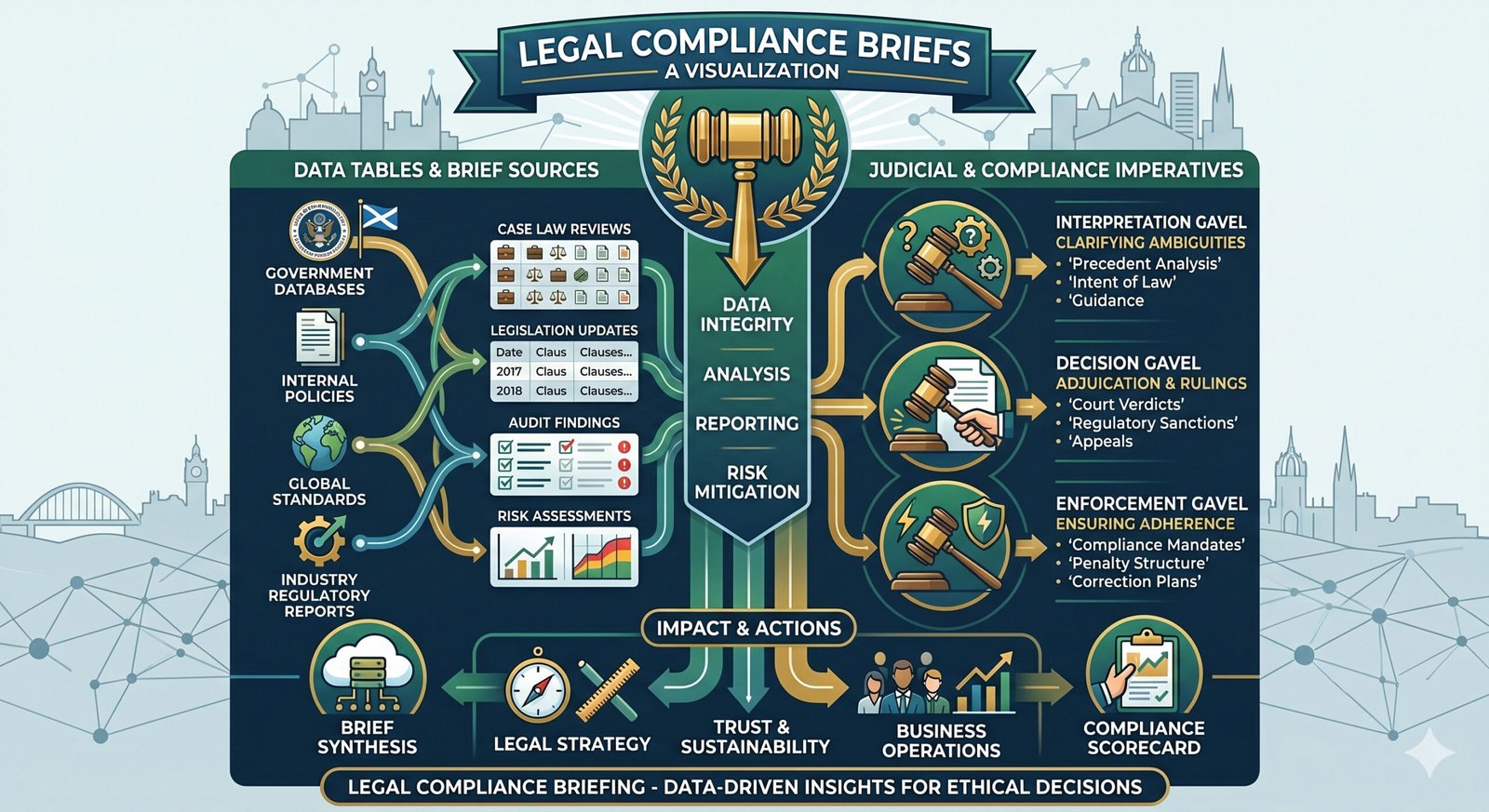

The Mid-Atlantic corridor faces a converging set of federal classification updates and heightened scrutiny of independent consultants that materially affect regional procurement, labor economics, and institutional risk profiles. CEOs, managing partners, and general counsels must translate federal reclassifications into actionable operational shifts across DC, MD, VA, PA, and DE, where federal spending and mixed public-private supply chains drive local growth and exposure.
The evidence suggests that classification changes will shift cost structures, contract eligibility, and talent sourcing strategies for Mid-Atlantic enterprises over the next 12 months. This briefing synthesizes regulatory signals, enforcement patterns, and tactical responses tuned for board-level decisions and near-term transaction planning.
Federal Contractor Classifications: Regional Impact
Federal reclassifications alter who qualifies for prime awards, subcontract availability, and socioeconomic set-asides, directly changing deal economics for regional firms. Strategic reality requires executives to model reclassification outcomes against existing contract pipelines and workforce models, given the Mid-Atlantic’s dense concentration of federal and state contracting activity.
Classification Drivers and 2026 Legislative Context
The primary drivers of reclassification include updated federal guidance on employee classification, revised small business size standards, and targeted agency rulemaking that reallocates certain services between contractor and consultant designations. The Mid-Atlantic will feel asymmetric impact where defense and civilian agency contract volumes cluster, particularly in Northern Virginia and the National Capital Region, changing competitive entry points for local suppliers.
Regional legislative activity in 2025 and early 2026 accelerated enforcement alignment with federal guidance, including state-level procurement audits and vendor registration changes. General counsels must track Public Procurement Reform Act (PA 2025) updates in Pennsylvania and Virginia Contractor Integrity Rules to anticipate qualification shifts that affect bidding pools and joint-venture strategies.
Economic and Operational Impact on Mid-Atlantic Enterprises
Reclassification increases employer-side liabilities, pushes up fringe-cost accounting, and narrows the pool of compliant subcontractors, raising effective bid costs by an estimated 3–7 percent for labor-intensive service contracts in 2026. The evidence suggests firms that fail to reprice contracts now will suffer margin compression and potential disqualification during post-award compliance reviews.
Operational leaders must re-run cost models for ongoing RFPs and standing orders, mapping reclassification sensitivities by labor category and by jurisdiction, with special attention to DC, where local contractor registration contacts federal procurement flows. Strategic Takeaway: reclassification drives near-term procurement volatility and longer-term sourcing restructuring.
Independent Consultant Compliance and Risk Tests
Independent consultant compliance now demands clearer documentation, stricter engagement terms, and proactive classification audits to withstand agency enforcement and private litigation. Strategic reality requires firms to implement robust tests that demonstrate contractor independence and economic risk allocation in every consultant engagement.
Compliance Tests and Practical Implementation
Agencies increasingly apply multi-factor tests that weigh control, integration, and economic dependence to determine worker status, and they favor documentation that evidences independent business operations. The Mid-Atlantic firms should institute a standardized compliance checklist covering written agreements, invoice practices, marketing materials, and multiple client relationships to sustain independent status in audits.
Practical implementation means mandatory pre-engagement classification reviews and quarterly validation of consultant portfolios, with General Counsels approving exceptions. Documented application of a consistent test reduces downstream audit risk and strengthens defense in bid protests or False Claims Act exposures.
Risk Assessment and Litigation Exposure
Classification missteps elevate exposure to wage-and-hour claims, tax liabilities, and bid debarments; the Mid-Atlantic’s aggressive plaintiff bar and active agency investigators amplify these risks. Boards must understand that a single high-value misclassification in the region can produce class action exposure and trigger cascading contract termination across state and federal portfolios.
Risk assessments should prioritize high-duration, on-site, and single-client consultants where dependence is measurable. Mitigation requires both contractual hygiene and contingency reserves sized to cover potential back-pay and penalty scenarios tied to regional enforcement precedents.
Bold Metrics: 3–7 percent bid-cost increase, Public Procurement Reform Act (PA 2025), Strategic Takeaways: implement pre-engagement classification reviews.
Enforcement and Audit Trends in the Mid-Atlantic
Enforcement agencies and state procurement offices have synchronized audit priorities, increasing the frequency of classification reviews tied to high-dollar contracts and critical infrastructure programs. The strategic implication for operators is clear: expect elevated compliance demands during pre-award and post-award phases, particularly for defense-adjacent suppliers in Virginia and Maryland.
Agency Behavior and Regional Patterns
Federal agencies have shifted audit teams toward service contracts and professional services categories, and state procurement authorities in the Mid-Atlantic adopted reciprocal information-sharing protocols in 2026. These patterns concentrate enforcement on entities that bridge federal and state contracts, creating a higher probability of multi-jurisdictional findings.
Vendors that operate across the corridor face sequential audits with overlapping standards, requiring unified compliance documentation that satisfies both federal and state queries. Legal teams must prepare consolidated responses to avoid inconsistent remedial requirements that increase operational disruption.
Audit Readiness and Evidence Standards
Audit readiness now focuses on contemporaneous evidence, not after-the-fact reconstructions; agencies expect agreements, invoices, and marketing artifacts to pre-exist classification assertions. The evidence suggests that firms without stamped, dated, and corroborating records will face adverse determinations that are costly to reverse.
Operational readiness plans should include an assigned audit lead, a document repository with immutable timestamps, and pre-packed remediation playbooks. Boards should demand quarterly audit simulations to surface weaknesses before official reviews arrive.
Operational Responses for CEOs and General Counsels
CEOs must integrate classification sensitivity into pricing, workforce planning, and acquisition diligence to preserve margins and transaction certainty. Strategic reality requires cross-functional steering groups that model reclassification shocks and set governance thresholds for contract approvals.
Governance and Process Changes
Instituting a classification governance committee that includes procurement, HR, legal, and finance creates expedited decision paths for bidder qualification and consultant engagement. The committee should enforce mandatory checklists, signoff matrices, and a central repository to ensure consistent application of classification standards across the enterprise.
Process changes will also include contract language standardization, updated SOW templates, and vendor onboarding reforms to filter non-compliant suppliers before they enter the supply chain. These changes reduce costly downstream remediation and support defensible positions in audits.
Talent and Sourcing Reconfiguration
Firms must anticipate a shift from contingent hires to salaried roles in categories where reclassification risk proves high, prioritizing roles that require continuity and on-site presence. Sourcing leaders should expand vetted subcontractor rosters in low-risk classifications and negotiate contract clauses that allocate compliance responsibility proportionately.
The hiring environment in the Mid-Atlantic favors conservative employment models; companies should budget for modest increases in fixed labor costs while preserving agility through hybrid sourcing strategies and strategic partnerships.
Transactional and Procurement Implications
Reclassification shifts influence deal valuations, indemnity negotiation, and post-merger integration risk, impacting private equity sponsors and strategic acquirers that target Mid-Atlantic contractors. Strategic reality requires acquirers and sellers to conduct forensic classification audits during diligence to avoid residual liabilities that erode transaction value.
M&A Due Diligence and Price Adjustments
Buy-side due diligence must quantify potential retroactive liabilities and integration costs tied to worker status, then adjust purchase price allocations and escrow sizing accordingly. The evidence suggests that undisclosed classification exposure commonly reduces realized deal value by creating contingent liability reserves and negotiation leverage.
Sellers should proactively remediate classification gaps before market processes and prepare warranties tied to classification compliance. This proactive approach accelerates deal timelines and improves certainty.
Procurement Strategy and Contract Clauses
Procurement teams should revise flow-down clauses, warranty language, and indemnity provisions to allocate classification risk transparently among primes, subs, and consultants. Contract managers must insist on audit rights and contractual remedies that cover classification failures, including recovery mechanisms for fines and back-pay obligations.
Strategic sourcing agreements should include periodic compliance certifications and escalation pathways for suspected misclassification events to preserve contract continuity and minimize operational interruptions.
Conclusion: Policy Watch: Re-Evaluating Federal Contractor Classifications and Independent Consultant Compliance
The Mid-Atlantic corridor faces an actionable shift in contractor classification and consultant compliance that requires immediate governance, audit readiness, and transactional vigilance from institutional leaders. Strategic Takeaway: adopt standardized classification tests, pre-engagement reviews, and governance bodies to align operational practice with evolving enforcement and legislative realities.
Forecast: Over the next 12 months, expect sustained enforcement activity targeted at professional services, a moderate rise in contract costs of 3–7 percent in affected categories, and increased state-federal audit coordination across DC, MD, VA, PA, and DE. Firms that implement rigorous documentation, adopt revised contracts, and size contingency reserves will outperform peers on bid success and M&A certainty.
Tags: federal-contracting, independent-consultants, Mid-Atlantic, compliance, procurement, M&A-due-diligence, risk-management
Mid-Atlantic Contractor Compliance Scorecard
| Metric | DC | MD | VA | PA | DE |
|---|---|---|---|---|---|
| Audit Frequency (2026 est.) | High | Medium | High | Medium | Low |
| Classification Risk (Service Contracts) | High | Medium | High | Medium | Low |
| Avg. Bid Cost Increase (%) | 5 | 4 | 6 | 4 | 3 |
| State-Level Reform Activity | Active | Active | Active | Emerging | Monitoring |
| Recommended Contingency Reserve (% of payroll) | 10 | 8 | 10 | 8 | 6 |
FAQ
What specific documentary evidence will agencies prioritize when testing consultant independence in a Mid-Atlantic audit?
Agencies prioritize contemporaneous written contracts, evidence of independent marketing, invoices issued to multiple clients, and clearly delineated deliverables showing autonomy. Forensic reviews will seek timestamps, client references, and tax filings that corroborate business operation status rather than dependent employment indicators.
How should acquirers price classification risk into purchase agreements for a Virginia-based services target?
Acquirers should conduct a targeted classification forensic, quantify probable back-pay and tax liabilities, and set escrow amounts or seller indemnities accordingly. Adjustments should reflect the target’s contract mix, duration of consultant engagements, and corrective action history, typically reducing enterprise value by the PV of expected remediation costs.
What procurement clause language effectively shifts classification audit exposure to subcontractors without violating flow-down limits?
Effective clauses require subcontractors to warrant classification compliance, maintain audit-ready records, and indemnify the prime for fines arising from misclassification. Ensure clauses align with prime contract obligations and include remediation timelines and termination rights for material compliance breaches.
How can General Counsels operationalize quarterly classification audits without creating excessive internal friction?
General Counsels should mandate a lightweight, standardized checklist, assign a cross-functional audit lead, and automate evidence collection into a secure repository. Limit friction by tying audit cadence to contract renewal cycles and providing remediation playbooks to address findings quickly and consistently.
For regional firms bidding on mixed federal-state projects, what immediate steps reduce multi-jurisdictional audit risk?
First, standardize engagement agreements and maintain centralized evidence. Second, run a jurisdictional risk map to prioritize high-exposure contracts for remediation. Third, negotiate contract clauses that harmonize audit rights and remedial obligations, and implement quarterly compliance attestations from critical subcontractors.