

Closing the gender gap in executive leadership roles strengthens economic resilience and improves organizational performance. When firms underuse half their talent, they lose decision quality, bench depth, and succession reliability. This matters during restructuring, mergers, and labor market shocks, when leadership capacity must stabilize quickly. As a senior workforce strategist, I focus on governance, measurable accountability, and workforce development ROI. Those elements convert equity goals into durable executive pipeline capacity.
To close the gap, leaders must redesign how talent moves from hiring to promotion. They must also ensure that executive selection, sponsorship, and evaluation systems reward outcomes fairly. Many organizations already publish statements and diversity targets. Yet progress stalls when accountability stays vague, metrics stay disconnected, and line leaders avoid hard tradeoffs.
This editorial report outlines practical approaches to build executive pipelines and govern leadership equity with measurable accountability. It includes a reusable model, an implementation roadmap, and data tables that leaders can adapt to their own context. The aim is straightforward: create executive teams that reflect full labor market capability and make talent decisions with institutional discipline.
Building Executive Pipelines to Close the Gender Gap
Diagnose pipeline breakpoints with a Workforce Maturity Matrix
Closing the gap requires identifying where women exit the pipeline. Many employers diagnose “overall representation” but ignore promotion transitions. I recommend the Workforce Maturity Matrix to pinpoint maturity by pipeline stage. Stage one covers entry and early development. Stage two covers manager readiness. Stage three covers cross functional exposure and strategic assignment. Stage four covers executive selection and board readiness.
Each stage should receive a maturity score from one to five. Score one means leaders track representation only. Score five means leaders track outcomes with role specific criteria and standardized development plans. You should set a target maturity score for each stage within 18 months. Then you should fund interventions aligned to the gap you observe.
A practical diagnostic uses simple questions. Do women receive stretch assignments at the same rates as peers. Do they receive sponsor support, not only mentors. Do they face inconsistent performance calibration across units. Do hiring panels include the same decision skills for every candidate. You can answer these with HRIS data, selection scorecards, and promotion committee audits.
Shift from training volume to promotion readiness outcomes
Training does not close leadership gaps by itself. The leverage comes from promotion readiness outcomes. That means you measure leadership capability behaviors that executives actually need. Examples include stakeholder management, budget stewardship, crisis leadership, and business case ownership.
A strong pipeline system links development to advancement milestones. It also uses targeted cohorts for women, especially where historic exclusion shapes access. Still, leaders must avoid segregated development that signals lower expectations. Instead, leaders should standardize entry requirements for programs while reserving capacity for underrepresented groups.
You should measure ROI using time to readiness. Track how long it takes participants to reach defined competencies and earn promotion eligibility. You should also compare outcomes to a matched control group. In this way, you can allocate budget based on evidence, not tradition.
Create sponsor driven mobility through structured stretch assignments
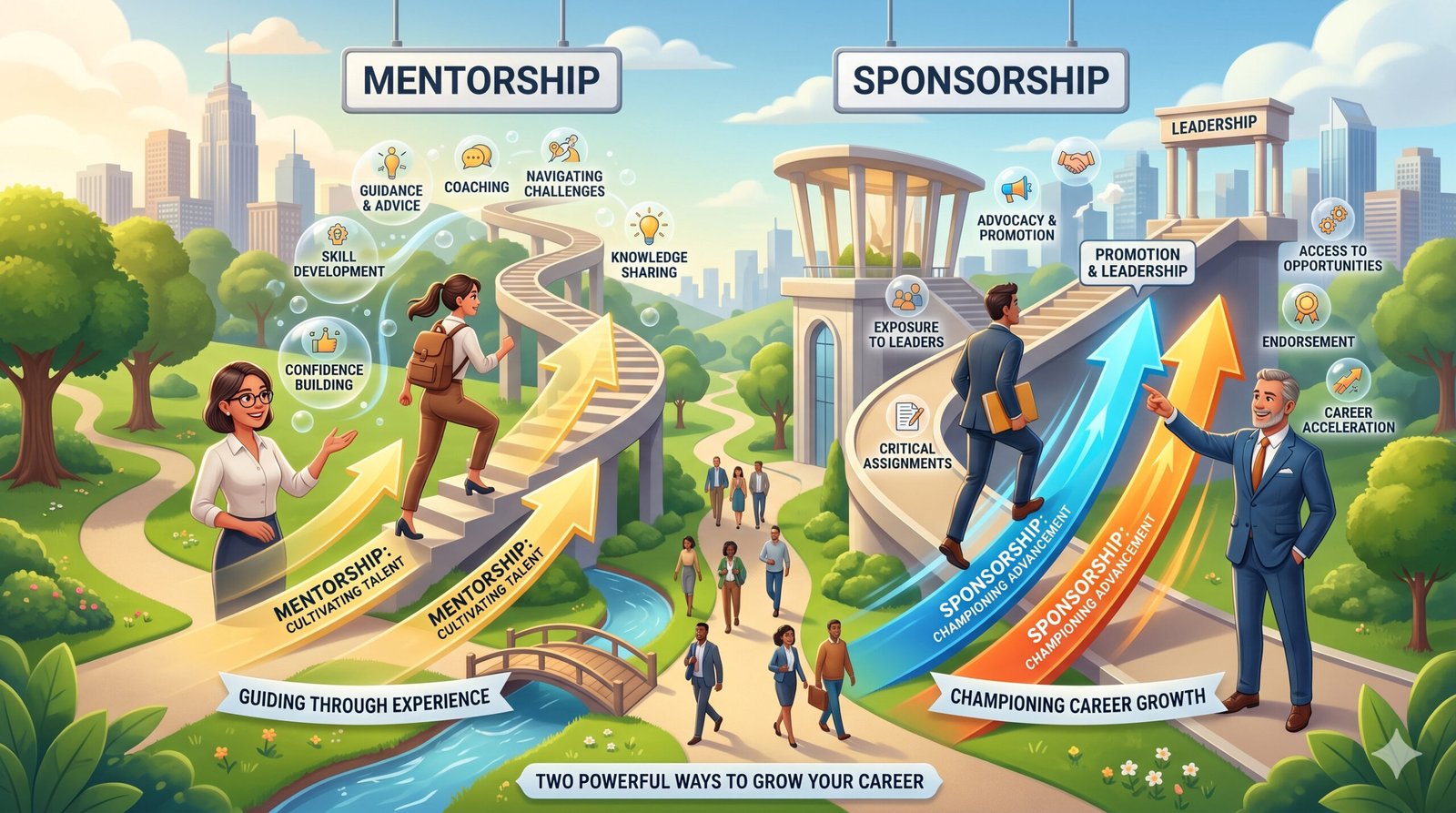
Mentorship helps, but executive advancement often depends on sponsorship and visibility. Sponsorship means a senior leader actively advocates for a woman when high stakes decisions occur. It also means that sponsor leaders nominate candidates for assignments that carry reputational risk.
Design stretch assignments with clear learning objectives and decision ownership. For example, assign a woman to lead a cross functional operational improvement with a measurable KPI. Then assign a senior sponsor to introduce her to executive stakeholders. Require regular sponsor check ins with evidence of progress.
You should also standardize rotation policies. Rotations should not rely on informal networks. Leaders should publish rotation criteria and publish selection status. That transparency reduces bias and builds trust across business units.
Use a transparent promotion framework anchored in calibrated criteria
Promotion systems often fail because criteria vary by manager or geography. A transparent framework uses calibrated criteria and consistent evaluation methods. Leaders should define what success looks like for each level. They should also define minimum requirements, plus role specific competencies.
Implement calibrated performance reviews across units. Use a common rating rubric and require justification evidence. Then conduct committee calibration sessions to reduce drift. You should audit outcomes by gender, role family, and tenure.
A transparent system also includes feedback loops. Candidates should understand what they need to progress. That includes development plans and timelines. When leaders deliver clarity, employees remain in the pipeline longer, and executive readiness increases.
Table: Pipeline metrics to diagnose and prioritize action
Use the table below as a starting point. Adapt definitions to your workforce categories and job families.
| Pipeline Stage | Gender Gap Metric | Data Source | Equity Target (12–24 mo) | Primary Intervention |
|---|---|---|---|---|
| Entry to first promotion | Hiring rate to promotion rate ratio | HRIS, hiring files | Match to same level as incumbents | Standardized onboarding, manager coaching |
| Manager readiness | Time to “ready for manager” | LMS, assessment results | Reduce readiness gap by 50% | Cohort-based leadership labs |
| Cross functional moves | Assignment selection rate | PMO assignments, rotation logs | Equalize selection within 6 mo | Sponsor nominations, transparent rotations |
| Executive selection | Offer acceptance and pass rates | Selection scorecards | Close selection gap to parity | Committee calibration, bias audit |
| Board and C suite | Board shortlist and C suite promotion | Board portals, succession plans | Increase shortlist share by 20–30% | Governance scorecards, formal succession |
Governing Leadership Equity with Measurable Accountability
Establish the Institutional Impact Scale for governance
Equity efforts fail when governance stays performative. I recommend the Institutional Impact Scale to govern leadership equity with measurable accountability. The scale measures four governance dimensions: strategy clarity, metric discipline, decision transparency, and remedy capacity.
Strategy clarity means the organization states specific executive pipeline outcomes. Metric discipline means leaders track relevant measures, not generic counts. Decision transparency means selection criteria and panel behavior get documented. Remedy capacity means leaders can correct inequitable outcomes without bureaucratic delays.
Score each dimension from one to five. Then link the governance score to leadership incentives. For example, require business unit heads to reach minimum thresholds on calibrated promotion outcomes. Also require them to address pipeline breakpoints within a fixed remediation window.
When leaders treat equity as governance, they also protect economic resilience. Stable succession reduces turnover risk and improves transition performance.
Build an accountability system that ties decisions to evidence
Accountability must start at the point of decision. Promotion committees and executive selection panels should use structured scorecards. Those scorecards should include required evidence fields. Examples include completed stretch assignments, measurable KPI ownership, and stakeholder feedback.
Leaders should also document deviations. If a panel ranks a candidate lower, the panel should record which criterion failed. That documentation supports later audits. It also reduces informal bias.
To ensure evidence quality, leaders must train committee members in rating calibration. They should also conduct periodic audits of selection outcomes by gender. The audits should not label individuals. They should detect systemic patterns.
Remedies should follow a repeatable process. When audits identify inequitable outcomes, leaders should review the underlying decisions. Then they should offer targeted development, regrade candidates when justified, or adjust criteria.
Publish equitable selection rules for executive and board roles
Executive and board roles carry distinct selection risks. Informal reputation signals often override documented capability. That bias gets worse when panels rely heavily on subjective leadership narratives.
You should publish equitable selection rules and process steps. That includes who can nominate candidates, how candidates get assessed, and which evidence categories matter. It also includes how the organization handles internal versus external candidates.
Board roles should use a board skills matrix. Then the organization should map women candidates to that skills matrix. You should avoid generic diversity goals and instead build a repeatable capability mapping.
This approach supports human capital strategy. It ensures the firm selects executives based on institutional needs. It also reduces hidden barriers that block diverse candidates.
Table: Executive equity governance and audit schedule
Below is a sample audit schedule. Adjust it to your promotion cadence and selection calendar.
| Governance Element | Owner | Evidence Required | Audit Frequency | Outcome Required |
|---|---|---|---|---|
| Promotion calibration | HR leader, business unit head | Scorecards, rating rubric | Quarterly | Calibration action notes and training updates |
| Sponsor program performance | Talent leader | Sponsor logs, advocacy outcomes | Semiannual | Change sponsor coverage where gaps persist |
| Executive shortlist composition | Chief HR, COO | Shortlist criteria and panel notes | Quarterly | Corrective actions for underrepresented outcomes |
| Board nomination process | Governance committee | Skills matrix mapping | Annual | Documented board skills match and gaps |
| Remedy and regrade process | Compliance, HR | Case files and resolution steps | Quarterly | Closed remediation cases with timelines |
Executive Implementation Roadmap
Phase 1, build the diagnostic foundation in 60 days
Start with a data baseline and a shared definition of “executive pipeline.” Select the job families that feed leadership roles. Then map the pipeline stages to your internal levels. You should define where women exit and where promotions slow.
Next, run an initial equity audit. Use promotion rates, time in level, selection outcomes, and assignment selection rates. Also review performance calibration variance by unit. This identifies bias signals and inconsistent criteria.
Finally, convene an executive working group with HR, legal, and business unit leaders. Charge the group with a single purpose: close pipeline breakpoints with evidence based actions. Publish a 90 day plan and assign owners with decision authority.
Phase 2, fund targeted interventions and redesign selection systems
In the next stage, you implement pipeline interventions that link to promotion readiness. Launch leadership labs with measurable competency assessments. Build sponsor driven stretch assignments with transparent nomination criteria.
At the same time, redesign selection systems. Use structured scorecards for executive and promotion decisions. Standardize evidence requirements. Train panel members on rating calibration and bias risk.
Then align incentives. Tie a portion of unit leadership metrics to governance outcomes. For example, set targets for calibrated promotion equity and stretch assignment access.
Avoid token programs. Do not run cohorts with no path to advancement. Connect each program to a promotion eligibility milestone.
Phase 3, operate with continuous audit, remediation, and reporting
Leadership equity requires ongoing operations, not a one time initiative. Set a quarterly reporting cadence for pipeline metrics and governance scores. Publish internal summaries with clear actions and decisions.
Also build a remediation playbook. That playbook should include how you handle regrades, targeted development offers, and selection process adjustments. It should also define timelines.
Finally, link improvement to culture. Train leaders in sponsor behaviors and feedback practices. Use role modeling from senior executives. Ensure the organization treats equity as operational discipline.
Table: Executive Implementation Roadmap checklist
Use the checklist below as an execution tool.
| Step | Deliverable | Owner | Deadline | Verification |
|---|---|---|---|---|
| Define pipeline stages | Stage to level mapping | HR analytics | Week 2 | Approved taxonomy |
| Baseline equity audit | Promotion, selection, assignments | HR analytics | Week 6 | Evidence pack ready |
| Committee scorecards | Structured evidence template | Talent ops | Week 8 | Panel sign off |
| Sponsor coverage model | Sponsor to candidate mapping | Talent leader | Week 10 | Sponsor logs published internally |
| Calibration training | Panel member training | HR | Week 12 | Post training test results |
| Quarterly governance review | Scorecard review and actions | Working group | Quarterly | Published action notes |
| Remedy playbook | Regrade and development rules | Compliance | Week 12 | Published policy memo |
Sector Benchmarks and Economic ROI
Measure workforce development ROI using time to competence
Workforce development ROI improves when you measure time to competence. Define competence as the ability to perform in an executive adjacent role. Examples include owning a business plan, managing cross unit risk, or delivering a transformation KPI.
Use cohort comparisons. Match participants to similar peers by role, tenure, and performance baseline. Then measure promotion rates, selection rates, and time to readiness. Include both short term and long term outcomes. Short term outcomes show program effectiveness. Long term outcomes show retention and advancement durability.
Then apply cost accounting. Calculate total program cost, including assessments, coaching, and time away from work. Compare costs to avoided external hiring and reduced leadership vacancy time. That lens supports economic resilience during labor volatility.
Tie equity investment to risk reduction in succession planning
Executive gaps create business risk. When vacancies persist, firms rely on acting leaders, which increases delivery variability. Equity efforts that strengthen pipeline depth reduce that risk.
You can model risk reduction by estimating vacancy duration impacts. Measure how long executive roles remain unfilled and how often acting leadership covers them. Then estimate performance variance using available KPIs like delivery, customer outcomes, or financial controls.
When women reach leadership roles through disciplined pipelines, succession becomes more stable. Stability improves governance continuity. It also improves investor confidence in long horizon execution.
Table: Example ROI metrics for leadership pipeline investments
Below are sample metrics leaders can adapt.
| ROI Driver | Metric | Baseline | After Program (Target) | Interpretation |
|---|---|---|---|---|
| Promotion readiness | Time to “eligible” | 18 months | 12 to 14 months | Competency conversion improved |
| External hiring dependency | % roles filled externally | 45% | 30% | Pipeline strengthens succession |
| Vacancy risk | Avg vacancy days | 120 | 70 to 90 | Reduced disruption and acting load |
| Turnover risk | Voluntary exits in women | 9% | 6% | Improved retention in pipeline |
| Selection equity | Pass rate gap | 15% | 0 to 5% | Calibration and transparency working |
Executive FAQ
1) How do we define “executive leadership roles” for equity measurement?
Define executive leadership roles by decision scope and business impact, not by job title alone. Create a level taxonomy that includes roles with budget authority, multi unit influence, and measurable responsibility for outcomes. Then map those roles to pipeline stages such as individual contributor to first manager, manager to director, and director to vice president. Ensure the taxonomy stays consistent across geographies and business units. Finally, align the definition with succession planning systems so your equity measures connect to real promotions. Avoid mixing job families that follow different promotion cycles.
2) What data sources should we use to detect bias in promotion decisions?
Use HRIS for representation and tenure, performance management records for ratings, and selection scorecards for evaluation evidence. Add rotation logs and assignment selection records to detect stretch assignment access. Also include panel composition records to understand who makes decisions. Capture calibration outcomes, including rating dispersion and required justification fields. Where available, use engagement surveys for early signals, but treat them as leading indicators, not proof of inequity. Finally, document the exact timing of decisions, because delays in feedback and readiness support differ by unit and manager.
3) How can we ensure executive training programs lead to advancement, not just participation?
Require competency outcomes tied to promotion readiness and link them to role level requirements. Use assessments that simulate executive work, such as business case development, risk reviews, and stakeholder negotiation exercises. Set a rule that program completion does not automatically grant advancement. Instead, program completion must trigger readiness review by an evidence based committee. Track promotion rates and selection outcomes for participants versus matched controls. Also publish expected development pathways so participants understand the next step. That clarity increases retention and reduces the perception of symbolic initiatives.
4) Should we use targets or quotas to close the gender gap in leadership?
Targets can guide action when you pair them with governance and transparency. Quotas may create compliance and cultural risks, and you should only consider them where law and collective agreements require them. In practice, many organizations adopt representation targets for short time windows, paired with process improvements and audit discipline. The better approach uses targets for outcomes and intermediate metrics, such as stretch assignment access and calibrated promotion parity. You should also measure remedy effectiveness and track whether leaders adjust criteria when gaps persist. This keeps targets evidence based rather than political.
5) How do we handle uneven sponsorship quality across senior leaders?
Treat sponsorship as a capability and govern it like one. Build a sponsorship model that clarifies responsibilities, expected cadence, and evidence requirements. For example, require sponsors to nominate candidates for relevant assignments and to provide advocacy in specific decision windows. Track sponsor actions through logs and outcomes, such as shortlist appearances and assignment selection. Then calibrate sponsors through coaching and training on structured advocacy. If uneven performance persists, reassign sponsorship coverage or adjust sponsorship incentives. Finally, ensure employees can request sponsor support through a transparent process.
6) What remedies work when audits show inequitable outcomes?
Use a defined remediation playbook. Start with a decision review that checks evidence quality, rubric use, and committee calibration. Then offer targeted development plans when criteria gaps explain outcomes, but only if the plan has measurable checkpoints. If the review finds inconsistent application of criteria, consider regrade cases through the same structured framework, with documented justification. For repeated systemic issues, adjust selection criteria, change panel composition rules, or revise calibration practices. Apply timelines so employees see process fairness. Publish summary remediation outcomes internally to strengthen trust and participation.
7) How can boards support closing the gender gap without losing focus on performance?
Boards should focus on leadership capacity, risk reduction, and succession resilience. They should request the governance scorecards for executive pipeline equity and validate that metrics link to business outcomes. Boards can also require standardized selection scorecards and transparency on panel processes. When boards oversee sponsorship and succession planning, they reduce reliance on informal networks. Additionally, boards can ensure executive compensation includes equity governance metrics tied to evidence based targets. This approach supports performance by improving leadership bench depth and continuity.
Conclusion: Closing the Gender Gap in Executive Leadership Roles
Closing the gender gap in executive leadership roles requires institutional discipline, not isolated programs. Firms must build executive pipelines that identify pipeline breakpoints, improve promotion readiness outcomes, and expand sponsor driven mobility. They must also govern leadership equity with measurable accountability, using scorecards, audit schedules, and documented remedies. The Workforce Maturity Matrix and Institutional Impact Scale give leaders practical ways to diagnose maturity and manage governance. Then they can invest with confidence by measuring ROI through readiness conversion, vacancy risk reduction, and reduced external hiring dependency.
Final Sector Outlook:
Labor markets remain volatile, and leadership continuity will increasingly determine operational resilience. Organizations that treat equity as governance can stabilize succession and improve decision quality. They also reduce compliance risks and strengthen employer reputation with workforce segments that expect fair processes. Leaders who align data, selection systems, and incentives will close the gap faster. Leaders who treat equity as a one time initiative will keep repeating the same cycle of leakage and underrepresentation. The path forward is clear, measure the pipeline, govern the decisions, and sustain improvement through audit and remedy.