

Collaborative training models help regions convert academic capacity into job-ready skills. They also help industry reduce hiring risk and stabilize talent pipelines. When universities, community colleges, employers, and workforce agencies coordinate training design and delivery, they improve both productivity and equity.
This report frames partnerships as workforce infrastructure, not a one-off program. It emphasizes governance that survives leadership turnover, funding mechanisms that align incentives, and outcomes that measure employability, not just course completion. It also proposes practical tools that institutions can adopt within one academic cycle.
As a senior workforce strategist, I view these partnerships through institutional ROI and economic resilience. Regions that build employer validated training systems gain labor market flexibility. They also gain credibility with learners who need clear pathways into stable work. The goal stays simple: deliver measurable hiring and wage progression.
Academy-Industry Partnerships for Skills and Jobs
Shared demand signals and labor market alignment
Industry partnerships begin with shared demand signals. Universities and employers often operate on different planning horizons. Academia tends to schedule curricula by semesters, while industry plans hiring by quarter and forecast cycle.
Partnerships close this gap by translating business needs into training requirements. Employers define competency profiles, tools, and compliance constraints. Faculty then map these into learning outcomes and assessment rubrics. Workforce agencies add local labor market intelligence, including vacancy rates and wage floors.
The operational target should focus on roles that show sustained demand. Partnerships should avoid narrow training for short lived spikes. They should also account for progression roles, so entry training supports later upskilling. This increases retention and reduces turnover costs for employers.
A role-based pipeline model for employability
A practical approach uses role-based pipelines rather than generic “workforce development.” Each pipeline connects an occupation to training modules and hiring criteria. Learners can see the pathway, while employers can see the qualification logic.
One model that institutions can adopt is the Workforce Maturity Matrix. It ranks partnership readiness across five dimensions: curriculum alignment, assessment rigor, employer intake process, learner supports, and outcomes tracking. Each dimension receives a maturity score from 1 to 5.
For example, early maturity shows employer input only at program launch. Later maturity shows employer validated assessments embedded in delivery. Advanced maturity shows co-managed apprenticeships with joint continuous improvement.
Below is a comparison of pipeline performance by maturity level. The figures reflect common patterns seen in applied workforce programs.
| Maturity level | Hiring conversion to trained roles | Average wage change at 6 months | Assessment validity strength |
|---|---|---|---|
| 1 Pilot | 20% to 35% | +2% to +5% | Light rubric checks |
| 3 Managed | 35% to 55% | +5% to +10% | Standardized skills tests |
| 5 Institutionalized | 55% to 75% | +10% to +18% | Employer signed competency gates |
Outcome measurement that reflects hiring quality
Partnerships also need outcome metrics beyond enrollment and completion. Employers care about speed to productivity, not course attendance. Learners care about job placement and wage progression, not certificates without labor market value.
A useful framework measures outcomes across the hiring lifecycle: job offer rate, start rate, time to productivity, retention at 6 and 12 months, and earnings growth. Programs can also track application funnel metrics, such as interview conversion and assessment pass rates.
Academic reporting should align with these metrics. Faculty tend to value formative learning indicators, such as mastery of specific competencies. Industry values performance on real work tasks. Partnerships should blend these views through employer verified capstones and work simulations.
Finally, outcome measurement must respect data privacy. Agreements should define what employers share, how long data remains stored, and who can access identifiable records. Clear governance prevents future mistrust.
Designing Shared Governance, Funding, and Outcomes
Governance structures that prevent drift
Partnerships often fail when governance stays informal. Leadership changes, priorities shift, and the partnership becomes a dormant committee. Shared governance must include decision rights, meeting cadence, and escalation paths.
A strong pattern uses a three-layer structure. First, a Steering Council sets strategy and authorizes budget. Second, a Program Board handles curriculum changes and employer intake standards. Third, a Learning Delivery Team manages assessments and learner supports.
Each layer should include representatives from institutions and employers. Workforce agencies should also participate when they control funding streams or employer outreach. Staff should document decisions and maintain a public partnership charter.
Governance should also define what happens when demand changes. If a role becomes oversupplied, partners must modify training volume quickly. If a compliance requirement changes, partners must update assessments within weeks.
Funding models that align incentives
Funding stays a central design constraint. Universities rarely control employer wage subsidies, while employers rarely fund academic overhead without cost sharing. Partnerships must blend sources and align incentives to training outcomes.
Common funding tools include employer membership fees, competitive grants, workforce board contracts, and tuition waivers. Additional options include apprenticeship sponsorship, tax credit leveraged programs, and shared facilities agreements.
The funding model should reward performance. If employer partners contribute, they should receive transparent reporting on training performance. If public funds drive capacity, programs should demonstrate labor market results.
Below is a practical comparison of four funding approaches and the incentives they create.
| Funding approach | Typical contributors | Best for | Incentive alignment risk |
|---|---|---|---|
| Employer sponsored cohorts | Large and mid employers | Specialized equipment training | Employer may underinvest in supports |
| Workforce board contracts | Local or state workforce agencies | Rapid scaling | Programs may over-optimize placements |
| Tuition and waiver hybrids | Colleges and learners | Mixed cohorts and longer programs | Learner cost barriers can reduce diversity |
| Apprenticeship or paid training | Employers and partners | Employment stability | Requires strong mentoring capacity |
Outcomes agreements with clear accountability
Partnerships need outcomes agreements that define targets and how partners respond when targets miss. Without this, stakeholders dispute metrics and lose urgency. The agreement should specify targets such as job placement rate, retention, and wage gains.
The agreement should also define attribution logic. Employers will ask, “Did training cause the result?” Universities will ask, “Did placement reflect student readiness?” Both sides need a reasonable measurement method.
One practical approach uses an Institutional Impact Scale. It grades outcomes across four levels: immediate competence, employment attainment, retention stability, and earnings progression. The scale allows programs to improve even when placement targets fluctuate.
Targets should also incorporate equity. Programs must assess participation by underrepresented groups and ensure fair access. Partners should track retention differences and adjust supports early. That work usually improves ROI.
A simple outcome agreement section can specify the escalation process. It can state that partners review results monthly during delivery. It can also state that partners conduct a quarterly program redesign cycle.
Executive Implementation Roadmap
Policy audit and readiness checks
Start with a policy audit that maps constraints. You should review procurement rules, curriculum approval cycles, and labor compliance requirements. You should also review data sharing policies and privacy requirements.
Then assess workforce demand clarity. You should verify hiring volume, skill specificity, and projected vacancy duration. You should confirm whether the role requires licensure or safety compliance.
Next evaluate institutional capacity. You should confirm whether faculty have time for applied delivery and whether labs can scale. You should also confirm whether learner supports can cover transportation, childcare, and basic needs.
Finally assess employer readiness. Employers must confirm willingness to host assessments, provide work simulations, and commit to feedback cycles. Without these actions, the partnership becomes a lecture series.
Design sprint and operating model build
After the audit, run a design sprint with a limited set of partners. You should run sessions that translate job tasks into competency standards. You should also define assessment instruments and passing criteria.
Then build the operating model. The operating model should specify learner intake, onboarding, and schedule coordination. It should also define support referrals, tutoring cadence, and coaching expectations.
Next build a delivery plan. Faculty should select teaching methods that mirror industry practice. Employers should co-develop capstones and provide equipment guidance where possible. Workforce agencies should coordinate case management and job matching.
The final deliverable of the sprint should include a program charter, an assessment map, and a data plan. The data plan should specify which metrics are tracked and how frequently dashboards update.
Contracting, procurement, and continuous improvement
Partnerships then move into contracting and procurement. You should standardize templates for data use agreements and performance reporting. You should also align payment terms with milestones, not only invoices.
Payments can tie to learner completion, assessment pass rates, and employer interview outcomes. Performance bonuses should also reward retention and wage progression when data availability allows.
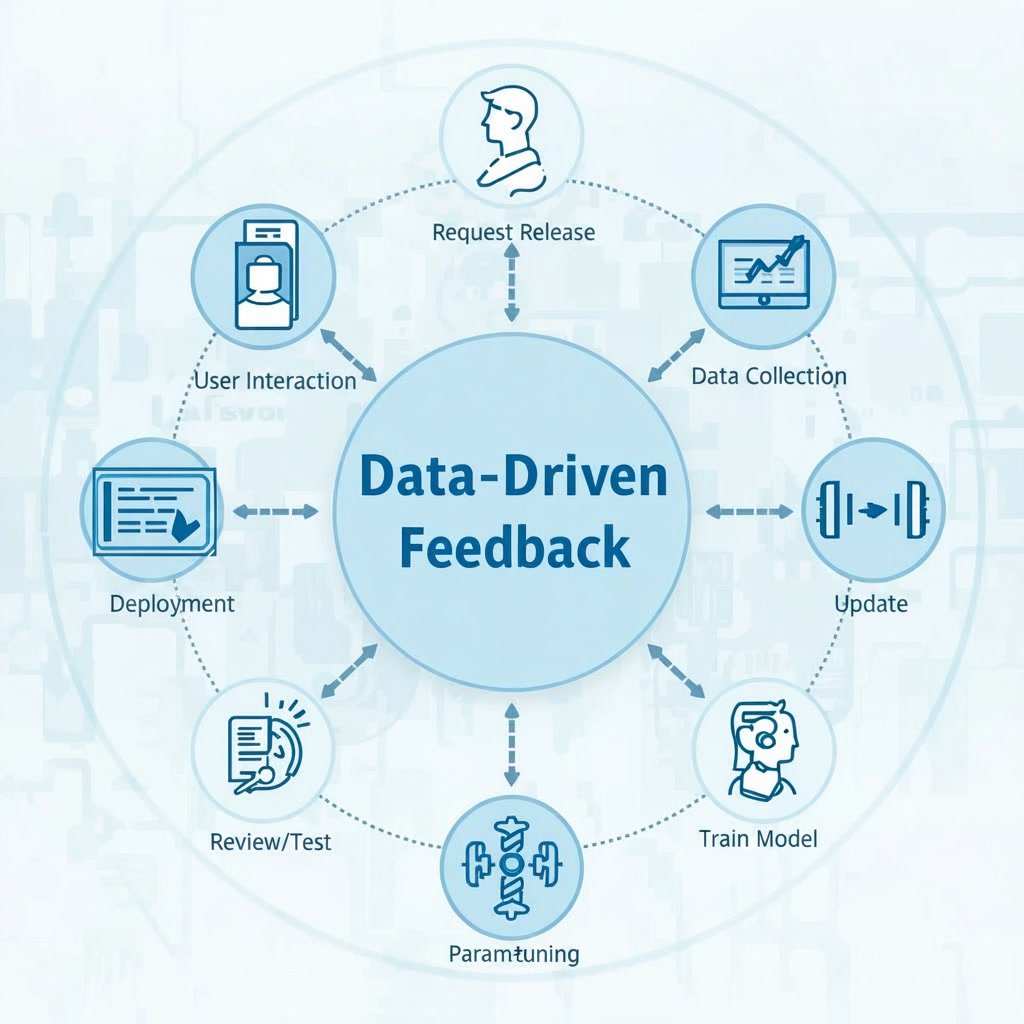
After launch, you should run continuous improvement cycles. Monthly meetings can review learner progress and assessment results. Quarterly meetings can review employer feedback and labor demand signals.
The partnership should also maintain a risk register. Risks include employer withdrawal, low learner readiness, and compliance changes. You should assign owners and mitigation actions for each risk.
Below is a checklist that teams can use during launch.
| Workstream | Checklist item | Owner | Target date |
|---|---|---|---|
| Governance | Partnership charter approved | Steering Council | Week 4 |
| Curriculum | Competency map completed | Program Board | Week 6 |
| Assessment | Employer validated rubric and tests | Learning Team | Week 8 |
| Funding | Signed funding and cost sharing | Finance lead | Week 8 |
| Data | Data sharing agreement and dashboard spec | Data lead | Week 10 |
| Delivery | Learner intake and onboarding process | Operations lead | Week 12 |
The Workforce Maturity Matrix
Dimension definitions and scoring approach
The Workforce Maturity Matrix measures how well a partnership functions as a pipeline system. It evaluates partnership maturity across five dimensions with observable indicators.
Dimension one is curriculum alignment. It asks whether employers validate competency standards that match job tasks. Dimension two is assessment rigor. It asks whether passing criteria reflect real work performance.
Dimension three is employer intake process. It asks whether employers commit to interview and onboarding standards for trained learners. Dimension four is learner supports. It asks whether programs provide coaching, referrals, and barrier removal.
Dimension five is outcomes tracking. It asks whether partners measure employment, retention, and earnings with defined time windows. You can score each dimension from 1 to 5 using evidence.
A score of 1 indicates ad hoc collaboration. A score of 3 indicates structured delivery with regular feedback. A score of 5 indicates joint management and stable reporting.
Benchmarking readiness across partner types
Different institutions reach maturity at different speeds. A research university may move quickly on assessment design but slower on employer intake commitments. A community college may move quickly on delivery but slower on employer validated governance.
Employers often start strong on competency definition but weaker on learner supports. Workforce boards may start strong on matching but weaker on academic assessment alignment.
The matrix helps partners identify the highest leverage improvements. It also helps avoid blame. A weak score signals a system gap, not individual underperformance.
Below is an example of how a partnership might score in year one.
| Dimension | Typical year 1 score | Main gap | Priority fix |
|---|---|---|---|
| Curriculum alignment | 3 | Limited employer update cycle | Quarterly task validation |
| Assessment rigor | 2 | Theory heavy exams | Employer work simulations |
| Employer intake | 2 | Variable interview commitment | Signed intake quotas |
| Learner supports | 2 | Support referrals not integrated | Case management embedded |
| Outcomes tracking | 2 | Data lag and missing metrics | Real time dashboard setup |
Using the matrix for investment decisions
The matrix should guide where to invest next. Partners should not scale volume before maturity reaches a minimum threshold. Scaling without assessment rigor produces reputational damage for both sides.
A typical rule is to require assessment maturity and outcomes tracking before expanding cohorts. Curriculum alignment should also improve, because employers update tools and compliance requirements regularly.
The matrix can also support funding justification. Public funders ask for measurable impact and risk management. The matrix provides a transparent path from baseline to improved outcomes.
Finally, the matrix can anchor staff development. Faculty need training on industry assessment methods. Employers need training on learner coaching and inclusive onboarding.
Data for ROI: What to Measure and Why
Labor metrics that predict long-term value
ROI needs labor metrics that reflect real employment performance. You should measure job offer rate, job start rate, and start-to-retention ratios. These metrics reflect both training quality and matching effectiveness.
You should also track time to productivity. Many employers define this as weeks until a trainee meets performance benchmarks. If partners do not track it, they cannot optimize delivery design.
Wage progression matters as well. Measure median wage at start and at 6 and 12 months. Also measure progression to higher responsibility roles when those pathways exist.
In addition, track credential portability. If the same skills translate across employers, learners keep mobility. That increases the perceived value of training and improves demand for future cohorts.
Training ROI model and cost categories
A practical ROI model separates costs and benefits. Costs include direct instruction, labor for curriculum development, learner supports, and overhead for facilities. Benefits include employer reduced hiring risk and increased productivity.
Public funders also care about social return. Benefits include lower unemployment duration and reduced reliance on public assistance. Use a consistent cost category approach across cohorts.
Here is a sample structure for ROI calculation.
| Cost or benefit item | How to estimate | Frequency |
|---|---|---|
| Training cost per learner | Total cohort cost divided by enrolled | Per cohort |
| Support cost per learner | Case management plus barrier supports | Per cohort |
| Employer productivity lift | Supervisor estimates and time to proficiency | Per cycle |
| Retention cost savings | Reduced turnover and reduced vacancy fill time | Semiannual |
| Earnings gain | Wage data at start and 6 months | 6 months |
You should treat ROI as a living analysis. Update assumptions when employer feedback changes. Update cost categories when partners learn that overhead differs from initial estimates.
An outcomes dashboard executives can trust
Executives need dashboards that reduce uncertainty. The dashboard should combine learner and employer metrics. It should also show cohort health indicators, such as assessment pass rates and support engagement.
You should avoid vanity metrics. Enrollment alone does not show workforce impact. Completion alone does not show job readiness.
A trustworthy dashboard includes both leading and lagging indicators. Leading indicators include assessment pass rates and interview conversion. Lagging indicators include retention and wage progression.
Below is an example dashboard specification.
| Metric type | Metric | Target example | Reporting cadence |
|---|---|---|---|
| Leading | Assessment pass rate | 70% plus | Monthly |
| Leading | Employer interview conversion | 40% plus | Monthly |
| Lagging | 6-month retention | 80% plus | 6 months |
| Lagging | Median wage growth | +8% plus | 6 to 12 months |
Sector Use Cases and Design Variations
Manufacturing and advanced logistics
Manufacturing partnerships often center on shop floor readiness. Employers need trainees who can operate under safety standards and quality systems. Universities and colleges must translate these standards into training tasks.
Partnerships succeed when they integrate performance assessments. Simulations using real equipment reduce ramp time. Employers also benefit when faculty understand production constraints and cycle times.
Logistics and warehousing partnerships involve different constraints. Employers care about process discipline, compliance, and scheduling reliability. Training modules should include shift based operations and incident reporting.
In both sectors, partnerships should include maintenance and continuous improvement content. This supports long term employability as jobs evolve.
Healthcare and regulated technical roles
Healthcare partnerships face compliance requirements that shape design. Training must support licensure pathways and validated competencies. Employers also require infection control and patient safety modules.
In these models, academia may lead curriculum design while employers lead clinical validation. Workforce boards can support placements and background check coordination. Partnerships must also consider clinical placement capacity, which can constrain scale.
The governance must also handle ethical and privacy constraints. Partners should set boundaries for student access to patient data. They should use simulations for early competence and then move to supervised practice.
Equity considerations become critical in healthcare pipelines. Learners may face longer training duration and higher cost burdens. Partnerships should provide targeted supports and mentoring.
IT, data, and cybersecurity pathways
In IT and cybersecurity, skill validation must address practical tasks. Employers often test for applied troubleshooting, not just tool familiarity. Academic partners should build assessment tasks that mirror operational environments.
Partnerships also need structured credential mapping. Learners benefit when training aligns with vendor certifications. Employers benefit when credentials reduce verification time.
A major risk is training drift in fast changing tool ecosystems. Partnerships should include a quarterly technology update cycle. Employers can provide validation tasks and updated scenario libraries.
The workforce supports matter as well. IT learners often need interview coaching and portfolio guidance. Partnerships should include job readiness modules that reflect real hiring processes.
Executive FAQ
1) How do we prevent partnerships from becoming “training for training’s sake”?
You prevent that outcome by tying every module to employer validated tasks. You also set performance gates before trainees advance. Partners should define competency pass criteria that employers accept for interviews and first-day readiness. You should then track leading indicators like assessment pass rates and interview conversion. You should also track lagging indicators like retention and wage progression. Governance should review outcomes monthly during delivery and quarterly for redesign. Finally, you should embed employer feedback into the curriculum update cycle, with documented change requests and approvals.
2) What is the minimum data we need to claim ROI credibly?
You can claim ROI credibly with a minimum dataset that covers learner employment and earnings. Start with job start rate, 6-month retention, and wage at start plus 6 months. If you can, add time to productivity and employer rating of trainee performance. Also track cohort size, demographic participation, and completion rates to evaluate equity and selection effects. You should document how you collect wage data and how you protect privacy. You can then compute cost per learner and compare it to earnings gains over time. Use consistent definitions across cohorts to avoid misleading comparisons.
3) How should partners handle attribution when learners already had partial experience?
Attribution requires transparency and reasonable controls. Partners should segment cohorts by experience level and document prior qualifications. You can stratify results by baseline readiness and compare outcomes within strata. You should also use employer validated assessments as a measure of training contribution to competence. Instead of claiming sole causality, you can report outcome changes relative to baseline expectations. You can also compare results to a historical control group when data permits. Most importantly, you should agree in advance on attribution rules in the outcomes agreement to reduce disputes.
4) What governance model works best when employer partners disagree on priorities?
Disagreement often signals a missing shared competency framework. You should establish a task inventory and competency map before curriculum changes. Then you should use a prioritization method like weighted criteria, with weights for demand, safety, and learning time. The steering council should set decision rights for disputes. Program boards should manage tradeoffs, such as covering must-have tasks at higher depth. Employers can also share rotating subject matter experts so the curriculum remains balanced. Finally, you should include a documented “minimum viable competency set” that all employers accept, even when preferences differ.
5) How do we fund learner supports without harming program scale?
You fund supports through a mix of sources and smart targeting. Start with identifying the barriers that most affect attendance and assessment readiness. Then target supports to those needs rather than providing uniform benefits. You can also blend support funding from workforce agencies, philanthropy, and employer sponsorship. Case management can reduce costs by preventing drop-offs. You should measure support usage and correlate it with assessment pass rates and retention. When you demonstrate impact, funders and employers become more willing to share costs. Scale then becomes a function of support efficiency, not just seat counts.
6) How can academia maintain academic standards while adopting employer assessments?
You maintain academic standards by aligning learning outcomes to employer competency requirements. You should treat employer assessments as part of the curriculum evaluation, not as a replacement for educational rigor. Faculty can design assessment validity through rubrics, reliability checks, and formative feedback loops. Employers provide real task criteria, while faculty ensure grading transparency and academic integrity. You should also preserve opportunities for broader learning, such as ethics, systems thinking, and communication skills. This balance improves learner resilience and reduces the risk of narrow, job specific training that limits future mobility.
7) What risks should we plan for in multi year partnerships?
Key risks include employer withdrawal, curriculum obsolescence, and data reporting failures. You should maintain employer engagement through defined intake commitments and feedback schedules. You should also schedule technology and process update cycles to avoid skill drift. Data risks require clear data sharing agreements and a single dashboard owner. Financial risks include cost overruns from facilities and staffing. You can mitigate this with milestone based budgeting and contingency reserves. Finally, staff turnover risks require documented processes, not dependence on specific champions. A risk register with owners and timelines should guide responses.
Conclusion: Collaborative Training Models: Partnerships Between Academia and Industry
Collaborative training models work when partners treat workforce development as a managed system. They connect competency standards to real hiring criteria and they measure outcomes across retention and earnings. They also build governance that clarifies decision rights and protects continuity through leadership changes.
The strategic takeaways are straightforward. Use shared competency maps and employer validated assessments. Align funding incentives with performance and create cost categories that you can audit each cohort. Build outcome dashboards that combine leading indicators and lagging employment metrics. Apply the Workforce Maturity Matrix to decide when to scale and where to invest next. Use the Institutional Impact Scale to track improvements even when hiring cycles shift.
Final Sector Outlook: regions that institutionalize these partnerships gain resilience against labor volatility. They also strengthen equity by offering transparent pathways into stable work. Over time, strong partnerships become a local advantage, attracting both employers and learners through demonstrated job outcomes.