
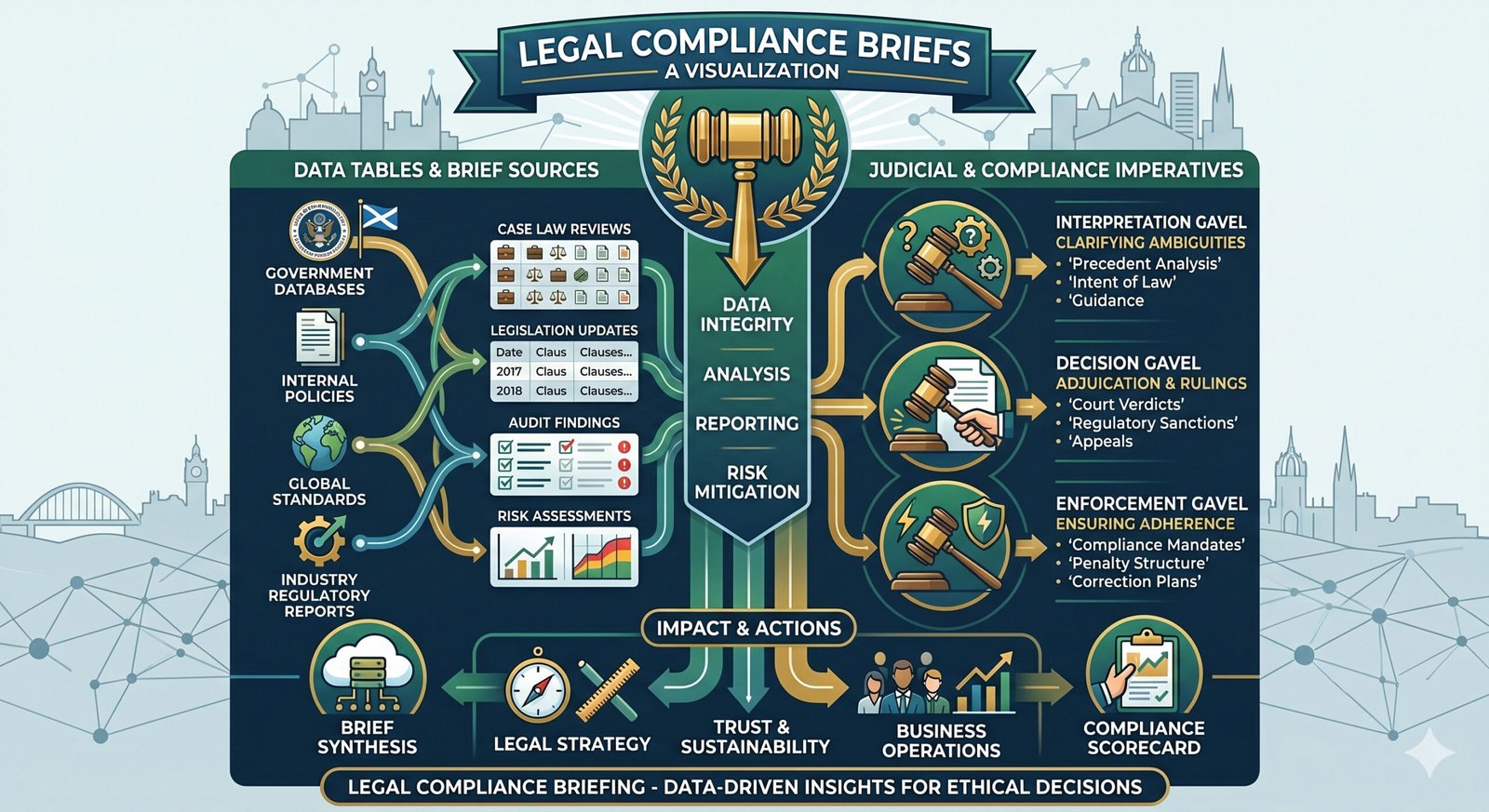

The Mid-Atlantic corridor faces a persistent high-interest environment in 2026 that reshapes how regional commercial actors source capital, price risk, and structure liabilities. CEOs and institutional leaders must align balance-sheet strategy with regional market dislocations, federal policy signals, and local regulatory friction to preserve liquidity and optionality. This briefing pack synthesizes actionable pathways, tactical choices, and governance-grade checklists tailored for DC, MD, VA, PA, and DE enterprises.
The operating reality reflects higher base rates, tighter bank lending standards, and increased demand for flexible covenant structures across growth and core commercial portfolios. Strategic reality requires integrating public funding programs, municipal credit windows, and private credit syndications to mitigate cost shocks and preserve governance oversight. The analysis below provides a scorecard, regional compliance notes, and a short forecast to support board-level decision cycles.
Regional Capital Paths in a High-Interest Market
Regional capital sourcing now requires mapping interest-rate friction into operational and strategic planning across the corridor. Market participants must treat capital as both a risk control and strategic asset, recalibrating tenor, covenants, and liquidity buffers to reflect Prime Rate 2026: 6.5% and elevated bank funding spreads. The evidence suggests immediate balance-sheet re-profiling where feasible.
Market-Driven Debt Instruments
Banks in the Mid-Atlantic have tightened underwriting on commercial real estate and leveraged sponsor financings, favoring first-loss cushions and shorter tenors. Borrowers must accept higher up-front pricing or pursue structural mitigants such as mandatory amortization or cash sweep provisions to secure lower attachment spreads. Institutional sponsors can achieve marginally better economics by presenting predictable cashflow covenants and third-party hedges.
Institutional and regional non-bank lenders now price liquidity differently, preferring unitranche or preferred-equity overlays on traditional senior debt. Private credit funds target structures with step-up coupons tied to leverage thresholds, which increases effective cost but preserves covenant flexibility for sponsors. Strategic borrowers should negotiate pre-agreed amendment pathways to limit price shock across reset events.
Public Programs and Municipal Windows
Federal and state-sponsored loan programs in 2026 provide selective credit enhancement for infrastructure, workforce housing, and defense-supply chain projects, creating cheaper blended rates for qualifying sponsors. Agencies in Pennsylvania and Virginia maintain targeted programs that can drop effective borrowing cost by 100-250 basis points, contingent on compliance with job-creation and local procurement clauses. Structuring for eligibility requires early legal coordination.
Municipal loan pools and pooled bond issuances offer fixed-rate alternatives for larger projects, but issuance costs and underwriting timing create execution risk. Sponsors should model issuance timelines and underwrite carry costs during marketing windows, while factoring in local statutory constraints such as Delaware Public Finance Act covenants where applicable. The trade-off often favors longer tenor and fixed pricing despite higher transaction fees.
Capital Supply Channels and Instruments
Capital supply in the Mid-Atlantic now bifurcates into regulated banking corridors and a growing private capital ecosystem, each with distinct pricing and governance implications. Executives must choose instruments not only on headline rate but on control, maturity, and regulatory capital treatment. The practical decision ties to liability management and strategic optionality.
Bank Syndications and Community Banks
Regional banks retain market share for loans under $50 million and provide critical local relationships for conditional funding tied to municipal approvals. The underwriting focus centers on borrower governance, sponsor liquidity, and stress-tested cashflow models assuming a 200–250 bps rate shock. Borrowers benefit from term flexibility but face stricter covenant enforcement and more frequent call windows.
Syndicated loans provide scale and diversification but introduce complexity in intercreditor arrangements and amendment processes, which can slow agility. Syndication channels price in secondary-market liquidity risk, increasing margins and covenant tightness for leveraged transactions. Executives should prioritize clear borrower covenants and waterfall language to avoid dilution during restructuring.
Private Credit and Direct Lenders
Private credit fills the gap for non-bank-friendly credits, offering bespoke structures, longer commitment periods, and sponsor-friendly amortization profiles at higher coupons. Direct lenders accept higher base costs in exchange for protective governance rights and limited public disclosure obligations. The flexibility benefits acquisitions and transitional financing in competitive Mid-Atlantic markets.
Private capital sources often demand warrant coverage or preferred equity that alters return allocation across sponsors and investors, which requires board approval and long-term capital planning. The evidence suggests that blending private credit with a lower-cost senior tranche can optimize weighted-average cost while preserving deal-level leverage targets. Compliance teams must review consent and transfer restrictions before execution.
Tactical Funding Choices for Mid-Atlantic Enterprises
Tactical funding choices now must account for localized legislative action, labor-market constraints, and sectoral demand shifts in government contracting and life sciences. Companies should adopt multi-stage funding playbooks that preserve runway and minimize refinancing risk into a higher-rate cycle. Strategic Takeaway: maintain at least 12–18 months of committed liquidity during M&A windows.
Short-Term Liquidity and Revolvers
Revolving credit facilities remain a first-line defense against operational volatility, but pricing now links to utilization bands and leverage-based step-ups. Lenders impose swingline caps and accordion conditions that can constrain growth; management should negotiate explicit amendment triggers and covenant cure mechanics. Revolver sizing should align with payroll and fixed-cost coverage given the corridor’s Low-Hire, Low-Fire labor dynamics.
Commercial paper and asset-backed short-term instruments work for corporates with high-quality receivables, but market access depends on rating and dealer appetite. Companies must model roll-over risk under stress and maintain backup facilities to avoid sudden funding gaps. The governance team should include contagion scenarios in the liquidity policy.
Terming-Out and Laddering Strategy
Terming out debt reduces refinancing exposure but increases upfront cost; laddering maturities across instruments flattens concentration risk on single refinancing windows. Corporates should aim to stagger maturities across a 3–7 year window, prioritizing fixed-rate issuance for long-lived assets. The plan should integrate callable features and prepayment penalties into net present value analysis.
Refinancing strategies must consider state tax treatments for prepayment and defeasance, especially for entities operating in multi-state footprints like DC and Pennsylvania. Strategic reality requires matching asset life to liability tenor to avoid stranded costs and regulatory mismatch. Use of caps and swaptions can hedge rate exposure but adds explicit derivative counterparty risk.
Mid-Atlantic Capital Scorecard
This named scorecard compares core instruments on cost, tenor, fit, and compliance friction across the corridor.
| Instrument | Typical Size (USD) | Cost Range (bps over SOFR) | Typical Tenor (yrs) | Regional Fit Score (1-10) | Compliance Note |
|---|---|---|---|---|---|
| Bank Term Loan | 1–50M | 150–400 | 3–7 | 8 | Local underwriting, faster closings |
| Unitranche / Private Credit | 5–200M | 350–700 | 3–6 | 7 | Warrants, transfer limits |
| Municipal Bonds (pooled) | 10–500M | 100–300 (tax-exempt) | 10–30 | 6 | Issuance lag, state statutory checks |
| SBA / State Loan Programs | 0.5–50M | 50–250 (subsidized) | 5–20 | 7 | Job-creation and procurement clauses |
| Receivables-backed CP | 5–150M | 75–275 | <2 | 5 | Rating and dealer access required |
Strategic Takeaway: Blend instruments to lower blended cost while preserving covenant and operational flexibility.
Institutional Lender vs. Private Capital Dynamics
Institutional lenders and private capital now pursue different return and control profiles, forcing boards to evaluate not just price but governance implications. The selection between the two alters downstream corporate control and future recapitalization options. The region’s strong institutional investor base provides depth but demands robust disclosure and covenants.
Governance and Control Trade-offs
Institutional lenders typically require standardized covenants and public-equivalent reporting, which increases transparency but limits tactical flexibility. Private capital demands looser operating covenants in exchange for control levers such as board seats or protective provisions. Boards must assess the long-term governance cost of preferred equity or control rights against short-term liquidity needs.
Term negotiations should reflect exit options, especially for PE sponsor-backed transactions in the Mid-Atlantic where secondary buyer appetite varies by sector. Structuring protective provisions with sunset clauses reduces permanent governance creep. The legal team should map amendment and default consequences to shareholder impact scenarios.
Pricing, Liquidity, and Secondary Markets
Institutional debt has more predictable secondary liquidity, with lower re-pricing volatility, while private credit trades less frequently, raising valuation opacity. The practical implication affects covenant tests tied to market valuations and triggers based on appraised asset values. Treasury should model refinancing under both liquidity regimes.
Private lenders can accelerate decision cycles for complex, non-bankable credits but often at a higher all-in cost and with restrictions on asset sales. The evidence suggests layered financing, using an institutional senior tranche with a private subordinate tranche, optimizes cost and governance balance. Ensure intercreditor mechanics remain executable in stress.
Risk and Compliance Considerations
Risk frameworks must now incorporate rate volatility, state regulatory divergence, and supply-chain dislocations tied to defense and life sciences contracting. Compliance teams need to harmonize multi-state statutory requirements and federal grant covenants into covenant matrices. Strategic reality requires continuous scenario-based stress testing.
Regulatory and Contractual Triggers
Regional statutory variations in lien perfection, tax foreclosure processes, and public procurement rules materially affect structuring, particularly for projects spanning multiple states. Lenders and borrowers must model enforcement timelines and cross-jurisdictional remedies, especially for real estate collateral subject to local housing statutes. Legal reviews should capture Pennsylvania Uniform Commercial Code variations and Virginia procurement clauses.
Contracts that hinge on federal grant receipts require bespoke covenant waivers and notification protocols, since grant timing can influence cashflow triggers. Execution risk rises when financing relies on awards with conditional disbursements. Establish escrow or intercreditor priority to isolate grant timing mismatches.
Hedging and Derivative Use
Interest-rate hedges now play a core role in capital planning, but counterparties require credit support and post-trade collateral posting. Swaps and caps reduce effective exposure but introduce CVA and liquidity demands during rate spikes. Companies should cap hedge notional to manageable collateral profiles and stress test margin calls.
Hedge documentation must align with accounting treatment and tax election across state lines to avoid unexpected P&L volatility. Use of swap providers should factor in regional bank counterparty concentration and replacement risk. The treasury policy should set explicit collateral thresholds and replacement triggers.
Actionable Board-Level Playbook
Boards must receive an executable playbook that converts capital strategy into measurable actions across finance, legal, and operations. The playbook should assign owners, timelines, and stress-test criteria to maintain governance discipline. Execution focus should prioritize runway preservation, flexibility, and regulatory alignment.
Immediate Steps for CEOs and CFOs
Direct immediate actions should include a 12-month liquidity run-rate, a maturity ladder review, and an updated covenant compliance certificate for all facilities. Boards should require scenario analysis on a 200–300 bps adverse rate move and a 20–30 percent revenue shock in key sectors. The evidence suggests prioritizing committed facilities over opportunistic markets.
Concurrently, legal should map material contract consents and cross-default triggers that could accelerate debt. Procurement and HR must align hiring and fixed-cost strategies to preserve the Low-Hire, Low-Fire operational model, keeping labor costs predictable. Approvals for new capital should carry a post-transaction monitoring plan.
Medium-Term Governance and M&A Posture
For M&A, set acquisition funding templates that favor pre-arranged bridge lines or private credit commitments with limited conditions precedent to speed execution. The board should pre-approve acquisition funding envelopes and maximum acceptable financing cost to prevent tactical overreach. Strategic reality requires a playbook that reconciles integration costs with financing covenants.
Adopt a rolling 24-month capital plan that updates every quarter and ties to EBITDA, leverage, and interest coverage thresholds required by regional lenders. Use the Mid-Atlantic Capital Scorecard to benchmark instrument selection and compliance friction. The plan should include decision gates and contingency triggers.
FAQ
How should a Mid-Atlantic SME prioritize between local bank credit and private credit for a $15M expansion?
Evaluate debt cost against covenant flexibility and speed to close, favoring local banks for lower all-in cost when collateral and cashflow are strong. Private credit offers speed and looser covenants but adds governance costs; choose private only if bank timelines or covenants impair execution of growth milestones.
What specific compliance checks are necessary when structuring blended municipal and private finance for a mixed-use development?
Validate state statute on municipal lien priority, confirm local zoning and procurement restrictions, and model tax-exempt bond eligibility clauses. Ensure bond counsel review of defeasance rules and municipal approval windows, plus contingency plans for grant-dependent revenue streams.
How can a regional institutional borrower mitigate refinancing risk with concentrated maturities in a 12-month window?
Implement targeted term-outs and laddering, secure committed revolver extensions, and pursue limited recapitalization with subordinated private capital. Negotiate amendment floors and pre-agreed waiver mechanics to prevent forced restructurings during short-term funding shocks.
What board-level covenants best protect institutional lenders while allowing operational flexibility for defense-contracting firms?
Set covenants tied to adjusted EBITDA, minimum liquidity thresholds, and project-level reporting for government contract milestones. Include swingline usage caps and permit customary M&A carve-outs, while keeping default thresholds aligned to objective financial metrics to avoid subjective enforcement.
For life sciences firms pursuing state loan programs, how should they structure workforce commitments to comply without impairing agility?
Negotiate scalable job-creation metrics tied to phased disbursements, align training credits with state workforce grants, and embed reasonable cure periods for hiring delays. Structure clawbacks with materiality thresholds and remediation pathways to avoid abrupt funding recapture.
Conclusion: Executive Briefing Pack: Navigating Capital Sourcing Paths in a High-Interest Regional Commercial Landscape
Boards must treat capital sourcing as an executable operational program, not a one-time transaction, balancing cost, control, and compliance across the Mid-Atlantic corridor. Preserve 12–18 months of committed liquidity, ladder maturities, and blend instruments to optimize weighted-average cost while protecting governance. The governance team should institutionalize scenario testing and quarterly capital scorecard reviews.
Forecast: Over the next 12 months, expect modest tightening of bank credit standards, continued growth in private credit commitments, and selective expansion of state subsidy programs targeting life sciences and defense suppliers. Interest volatility should compress deal windows and favor fixed-rate or blended-tenor deals, while enhanced state-level procurement scrutiny will increase transaction compliance cost. Boards that implement rigorous laddering, proactive hedging, and a documented funding playbook will maintain strategic optionality and mitigate refinancing and regulatory risk.
Tags: Mid-Atlantic finance, capital sourcing, private credit, bank lending, liquidity management, regional compliance, corporate governance