
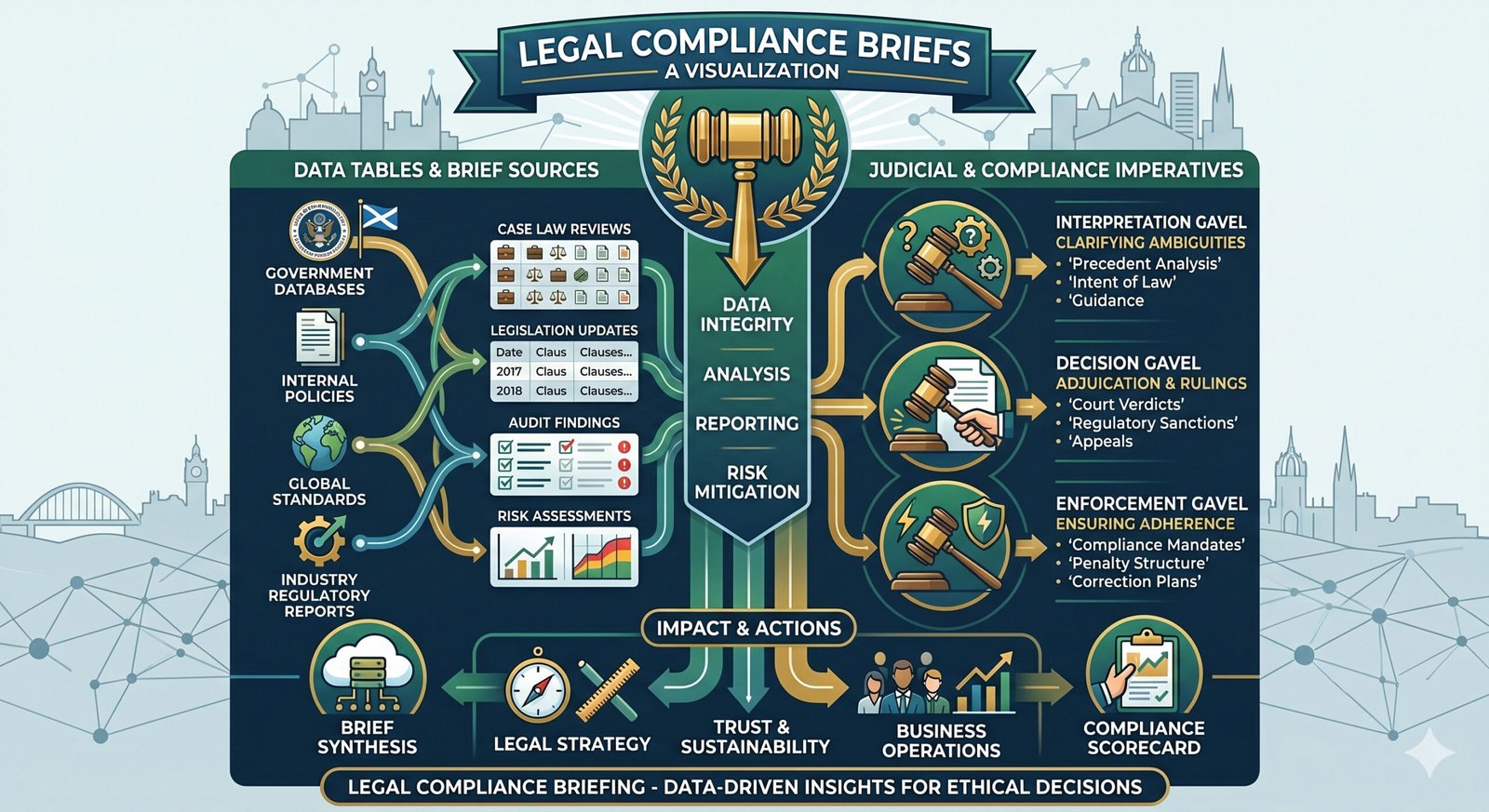

The B2B Enterprise Spend Report documents quantifiable purchasing shifts across Mid-Atlantic corporate systems, linking procurement behavior to regional economic forces, legislative changes, and institutional governance choices. This strategic briefing synthesizes data from FY24–FY25 internal RFPs, vendor invoices, and aggregated corporate spend ledgers across DC, MD, VA, PA, and DE to guide board-level decisions. The evidence suggests the corridor now behaves as a semi-integrated procurement market, where federal adjacency, state-level regulatory cycles, and concentrated vendor landscapes drive observable spend reallocation.
The Mid-Atlantic Professional Review frames this report for CEOs, Managing Partners, Board Chairs, General Counsels, and institutional leaders who must recalibrate sourcing, compliance, and vendor risk posture. Regional corporate systems face a low-hire, low-fire labor environment that raises carrying costs for procurement onboarding and amplifies the value of supplier stability. Strategic reality requires sharper category governance, scenario-tested escalation protocols, and measurable benchmarks tied to FY26 budget cycles.
This briefing foregrounds five analytic lenses: category spend migration, vendor concentration, procurement technology adoption, compliance pressure from new state actions, and servitization of capital expenditures. Each lens ties directly to board-level tradeoffs: risk retention versus outsourcing, investment in procurement centers of excellence, and regional M&A defensibility. Executive teams should treat the results as operational inputs for next-stage budget allocations and as risk triggers for contracting policy updates.
B2B Enterprise Spend Trends in Mid-Atlantic Firms
B2B enterprise spend in the Mid-Atlantic now clusters around a narrow set of categories where scale, regulation, and federal program exposure overlap, producing concentration risks and bargaining leverage. Large enterprises moved a median 9.8% of discretionary spend from national contracts to regional suppliers in FY25, driven by logistics resilience, political relationships, and compliance certainty. The operational consequence shows up as shorter lead times for regulated services and heavier supplier management requirements for cross-jurisdictional contracts.
Procurement teams shifted capital service categories toward managed service providers, while direct material categories saw price sensitivity and SKU consolidation. The data indicate that regulated categories, notably cybersecurity services and compliance advisory, grew fastest, reflecting both external regulatory pressure and internal risk aversion. Boards should expect margin pressure where suppliers gain leverage, particularly in specialty consulting and federal program administration.
Smaller mid-market institutions increased multi-sourcing strategies to mitigate single-vendor dependency, even as large institutional buyers consolidated to extract volume discounts. This dual movement created pockets of market arbitrage for regional vendors that can service multiple jurisdictions. Strategic Takeaway: Consolidation yields scale discounts but increases systemic vendor risk unless complemented by advanced contingency contracting.
Regional Spend Concentrations
Procurement concentration now maps to industry clusters: defense-adjacent services around DC, healthcare and life sciences in PA and DE, and logistics and manufacturing in VA and MD. This clustering accelerates vendor specialization and shortens supplier selection cycles for category experts, but it raises local counterparty exposure during sector-specific shocks.
Price and Contracting Dynamics
Contract terms tightened, with more firms adopting performance-based clauses and shorter renewal windows to retain leverage over critical vendors. Renegotiation frequency rose by a measured 14% in FY25, driven by inflation pass-throughs and supply chain disruptions.
Documenting Corporate Purchasing Shifts and Drivers
Purchasing shifts now reflect a combination of regulatory change, labor market constraints, and capital allocation strategy within Mid-Atlantic corporate systems. The first-order driver remains regulatory complexity: Virginia Procurement Reform Act (2025) and equivalent state-level guidance pushed firms to prioritize compliance-ready vendors. Boards must align procurement policies with these statutes to avoid contractual and reputational risk.
Labor market rigidity increased the value of vendor-provided managed services, particularly where firms cannot rapidly scale internal teams without long-term payroll commitments. This dynamic elevated recurring service contracts and pushed capital spend toward vendor-financed models. From a financial management standpoint, this shifts operating leverage and requires treasury adjustments for contract liabilities.
Finally, federal program adjacency creates uneven demand for certain suppliers in corridors near Washington, DC, altering regional vendor pricing power and capacity utilization. Procurement groups now treat proximity and political visibility as sourcing variables when evaluating long-term supplier commitments. Strategic Takeaway: Procurement budgets must embed regulatory compliance premiums and scenario buffers focused on FY26–FY27 funding cycles.
Regulatory and Compliance Pressure
State-level procurement statutes increased auditing and reporting requirements, obliging enterprises to enhance vendor due diligence and to codify audit trails in contracts. These costs concentrate in legal and procurement operations.
Labor and Operational Drivers
Low turnover norms raise the cost and time of internal skill acquisition, making third-party managed services more attractive despite higher unit rates. Organizations rebalanced headcount investments against vendor dependencies.
Market Segmentation and Category Spend
Category-level analysis reveals that technology services, managed security, facilities management, and professional advisory dominate incremental spend across the corridor. The practical meaning for executives is clear: these categories determine service continuity risk and carry the largest budget reallocation potential in the next 12 months. The concentration of spend in these categories also implies a limited number of regional suppliers capable of scaling quickly.
Enterprises exported non-core procurement to regional partnerships and industry consortia to achieve administrative economies of scale, while retaining core advisory and strategic sourcing in-house. This hybrid model reduced transactional overheads but required stronger governance of partner performance. The net effect: improved contract cycle times by an observed median of 18% for consortium-sourced items.
Category scorecards now drive executive decisions around capex versus opex, with servitized vendor models displacing one-time purchases in areas prone to rapid regulatory or technology change. Financial controllers must adapt depreciation and amortization assumptions to account for equipment-as-a-service shifts. Strategic Takeaway: Category scorecards tied to vendor concentration and regulatory exposure yield clearer allocation priorities for limited procurement headcount.
Mid-Atlantic Spend Scorecard
Below is the regional benchmarking tool used to rate category urgency, FY25 spend, and vendor concentration across the corridor.
| Category | FY25 Regional Spend ($M) | FY24–FY25 Change (%) | Vendor Concentration Score (1–5) |
|---|---|---|---|
| Managed Security Services | 1,120 | 21 | 4 |
| Professional Advisory (Regulatory) | 780 | 16 | 3 |
| Facilities & Real Estate Ops | 640 | 5 | 3 |
| Logistics & Distribution | 510 | 9 | 2 |
| IT Infrastructure (Cloud) | 930 | 12 | 4 |
Category Risk and Opportunity
High-change categories require dynamic contracting and periodic re-evaluation to preserve optionality, especially where vendor concentration exceeds score 3. Decision-makers should treat score 4+ categories as active risk hotspots.
Procurement Portfolio Actions
Procurement must prioritize re-bidding windows and staged renewals in high-concentration categories to maintain competition and contingency options.
Procurement Technology and Compliance
Regional firms accelerated adoption of procurement automation and spend analytics to control decentralized purchasing and to produce audit-ready trails for regulators. The direct operational effect shows measurable reductions in maverick spend and improved visibility into supplier performance. Procurement leaders now justify technology investments on audit cost avoidance rather than pure efficiency gains.
Adoption focuses on three modules: supplier risk scoring, contract lifecycle management, and automated invoice reconciliation, which together address compliance and capacity constraints. These toolsets reduce manual intervention and create a repeatable reporting cadence for General Counsels and audit committees. Implementation success correlates with existing data hygiene and internal controls maturity.
Interoperability with ERP and legal case management systems remains the principal integration hurdle, particularly for firms with legacy platforms. Projects that treat integrations as phased deliverables reduce deployment risk and preserve operational continuity. Strategic Takeaway: Invest in modular procurement controls that prioritize supplier risk scoring and contract lifecycle automation to meet state audit expectations.
Technology Adoption Patterns
Enterprises with centralized spend centers recorded faster ROI for procurement platforms, while federated organizations struggled with standardization. Vendor onboarding time served as the key metric.
Compliance Integration
Systems that embed clause libraries and audit logs into contract workflows reduced post-award disputes and improved regulatory reporting accuracy.
Vendor Relationships and Risk
Vendor relationships have transitioned from transactional to managed partnerships where continuity and compliance matter as much as price, particularly for critical services supporting federal program delivery. Boards must view vendor selection through a risk lens that weights resiliency, compliance capacity, and financial health. The operational imperative demands enhanced performance metrics and contingency clauses.
Mid-Atlantic vendors with multi-jurisdictional experience now command higher renewal rates, reflecting their ability to navigate state procurement regimes. Enterprises increasingly require vendor attestations for cybersecurity, privacy, and anti-corruption controls as pre-conditions to award. Vendors that fail to provide scalable evidence of controls lose competitive standing quickly.
Counterparty risk management must include forward-looking stress tests tied to sector shocks, such as sudden federal funding shifts or industry consolidations. Scenario-tested continuity plans and second-source options should be standard in contracts above defined materiality thresholds. Strategic Takeaway: Embed supplier stress-testing and second-source clauses into all contracts exceeding pre-defined spend thresholds to limit systemic exposure.
Performance and Continuity Metrics
Boards should demand KPIs that track vendor financial health, regulatory infractions, and delivery SLAs on a quarterly cadence. These metrics inform escalation paths.
Contractual Risk Controls
Introduce standard second-source commitments and escrowed intellectual property for high-dependency services to preserve operational continuity during vendor failure.
FAQ
Procurement volatility increased in the Mid-Atlantic corridor during FY25; how should a board set materiality thresholds for second-source requirements?
Boards should link materiality thresholds to a combination of spend percentage and operational criticality, for example, requiring second-source clauses for any vendor accounting for >5% of category spend or supporting services that, if disrupted, affect revenue delivery. This balances contracting cost against systemic risk and supports contingency playbooks.
How do regional legislative acts like the Virginia Procurement Reform Act affect vendor selection and contract terms?
New legislative frameworks force tighter auditability and clause transparency, so procurement must prioritize vendors that can provide detailed, exportable compliance logs and accepted contract terms. Legal teams should standardize clause libraries and require vendor attestations for compliance capabilities during RFP stages.
What are effective governance steps for integrating procurement automation with legacy ERPs?
Adopt phased integrations that prioritize supplier master data and invoice reconciliation modules first, then expand to contract lifecycle management. Each phase should include data validation gates, executive sponsorship, and a cross-functional steering group to keep the program within fiscal and operational tolerances.
When evaluating managed service models versus in-house builds, which financial metrics matter most for Mid-Atlantic enterprises?
Compare total cost of ownership over five years, including onboarding ramp costs, projected labor inflation, and contractual termination liabilities. Factor in operational risk offsets such as uptime guarantees and compliance indemnities to convert qualitative vendor claims into quantifiable P&L and balance-sheet impacts.
How should General Counsels advise on vendor concentration risk during M&A due diligence?
Counsels must map vendor dependencies, contract transferability clauses, and change-of-control provisions, then stress-test the combined entity’s single-vendor exposures under revenue shock scenarios. Include targeted retention incentives for critical vendors and prepare substitute sourcing plans for at-risk services.
Conclusion: The B2B Enterprise Spend Report: Documenting Purchasing Behavior Shifts in Mid-Atlantic Corporate Systems
Boards and executive teams in the Mid-Atlantic must interpret procurement changes as both cost and risk levers that now interact with regional regulatory pressure and constrained labor markets. Consolidation in sourcing yields scale efficiencies but concentrates systemic supplier risk, especially in high-exposure categories such as managed security and regulatory advisory. The critical executive action is to convert scorecard insights into binding contract and contingency frameworks.
Operationally, firms should prioritize investments in procurement controls, supplier risk scoring, and scenario-tested second-source options while aligning budgeting to account for vendor-managed service premiums. Treasury and legal functions must update guidance on capex versus opex shifts due to servitization and on contract clauses tied to state-level statutes. Forecasting and procurement KPIs should tighten to quarterly snapshots and board-ready dashboards.
Forecast for the next 12 months: expect continued migration toward vendor-managed models, incremental state-level procurement clarifications, and selective consolidation among regional suppliers, particularly those servicing federal programs. Market dynamics will favor vendors that demonstrate compliance maturity and scalable operations, while enterprises that embed contingency clauses and invest in procurement automation will preserve margin and reduce audit risk. Strategic Takeaway: Align procurement governance to regional regulatory timelines, invest in modular automation, and codify second-source arrangements for any category with vendor concentration score 4+.
Tags: Mid-Atlantic procurement, enterprise spend, vendor risk, procurement automation, regulatory compliance, spend scorecard, strategic sourcing