
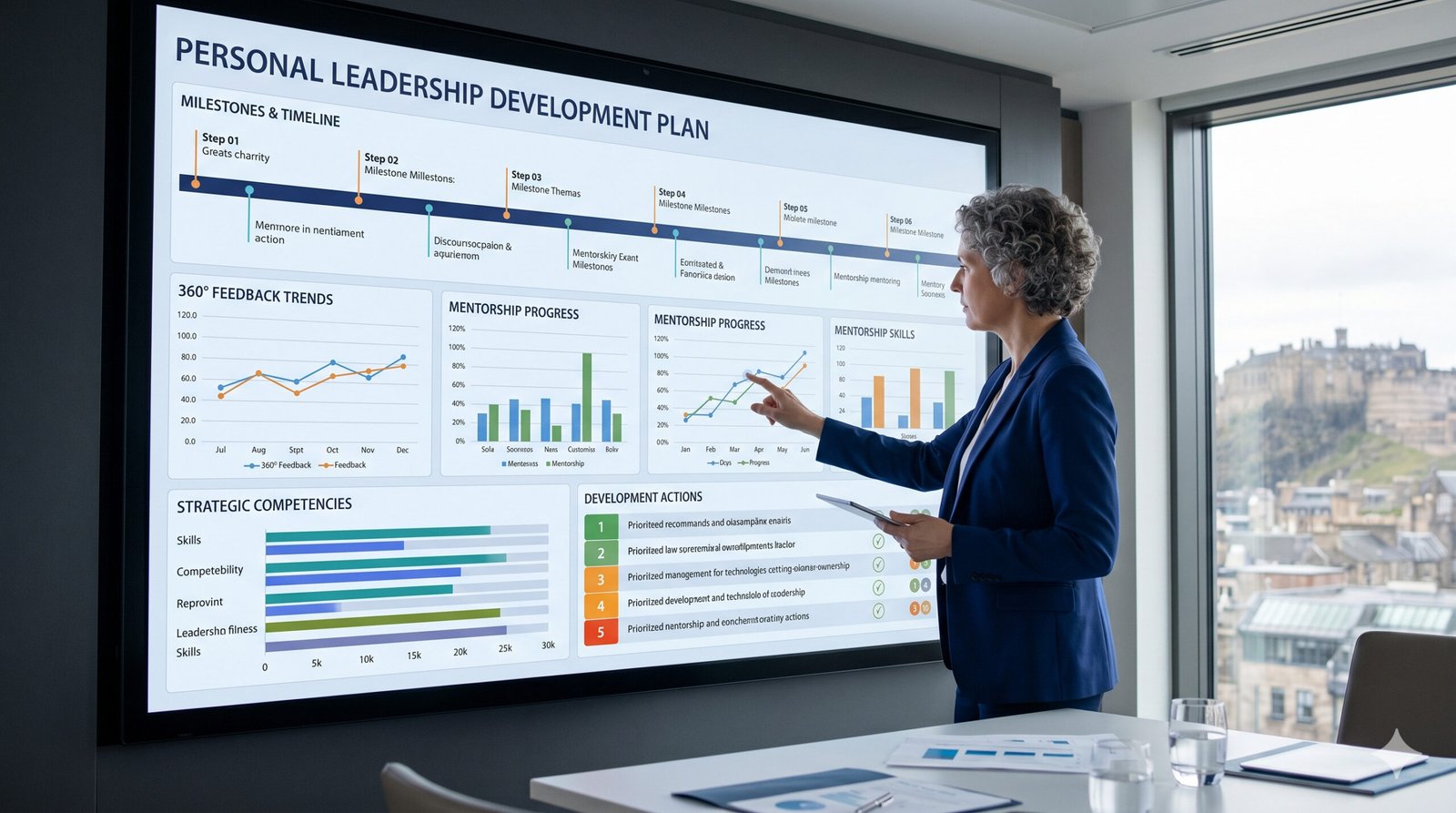

Hybrid work now behaves like an operating system for how professionals collaborate, decide, and deliver outcomes. Organizations that treat it as an improvisation layer will see coordination friction, uneven productivity, and governance gaps. Organizations that treat it as a governed capability will earn economic resilience, measurable workforce ROI, and safer, fairer decision making.
Hybrid Workplace 2.0 shifts the focus from tools and remote policies toward professional coordination standards. It aligns meetings, deliverables, escalation paths, performance rhythms, and training investments. It also strengthens institutional trust by clarifying who decides, when work updates happen, and how leaders measure progress without bias.
This white paper style report outlines best practices that help enterprises coordinate work across time zones, functions, and employment types. It uses an original framework, the Workforce Maturity Matrix, and a governance audit approach to make coordination operational, not aspirational.
Hybrid Workplace 2.0 works best when leaders implement shared cadence, measurable accountability, and continuous improvement. These practices reduce rework, protect deep work, and improve the durability of delivery systems under demand swings.
Hybrid Workplace 2.0: Governance and Coordination Standards
Define “coordination outcomes” beyond attendance
Professional coordination fails when organizations only track presence and status. You need outcomes that reflect how work flows. Define coordination outcomes such as cycle time, decision latency, handoff quality, and incident response speed. Then align roles, meeting structures, and documentation norms to those outcomes.
Start by mapping the most common work patterns in your organization. Examples include product planning, client delivery, incident management, and internal audit cycles. For each pattern, specify required inputs, expected outputs, and timing windows. This converts coordination from a culture story into operational requirements.
Use a measurable language for coordination performance. Track how quickly teams turn inputs into decisions and deliverables. Track how often changes occur after approvals. Track how reliably work updates arrive before dependencies start. Your governance standards should connect to those metrics.
Establish policy clarity with “decision rights” and escalation paths
Hybrid workplaces fail when people do not know who decides. They also fail when escalation requires social capital instead of process. You should document decision rights by role and scenario. You should also define escalation paths that trigger at set thresholds.
For example, define escalation for project scope changes, security incidents, budget variances, and customer escalations. Require named owners for each decision category. Require backups for vacations or temporary reassignment.
Then connect escalation to communication norms. You can require a standard channel for urgent updates and a standard format for decision requests. This reduces ambiguity and prevents duplicated effort. It also improves fairness for remote and part time professionals.
Use an Institutional Impact Scale to size governance intensity
Not every function needs the same governance intensity. You can apply the Institutional Impact Scale to prioritize investment. The scale uses four dimensions: customer or safety impact, cost of delay, regulatory exposure, and workforce criticality.
High-impact processes need stricter cadence and documentation. Medium-impact processes can use lighter governance with fewer formal artifacts. Low-impact processes can rely on team autonomy with minimal reporting burdens.
This approach protects productivity. It avoids forcing a high compliance workload onto low risk operations. It also guides leaders where to invest in training and tooling first. Use the scale during policy design and during quarterly reviews.
Table: Coordination metric benchmarks by governance intensity
Below is a practical benchmark set you can adapt by industry and regulatory context.
| Governance intensity | Typical process examples | Decision latency target | Handoff rework target |
|---|---|---|---|
| High | Safety, finance controls, incident response | 24 to 48 hours | Under 10% |
| Medium | Cross functional delivery, client programs | 3 to 7 days | Under 15% |
| Low | Advisory work, early exploration | 1 to 2 weeks | Under 20% |
Codify meeting mechanics to prevent coordination drift
Hybrid teams lose momentum when meetings do not follow mechanics. You should codify meeting mechanics as governance standards. Set rules for agendas, pre reads, decision logging, and action ownership.
Require agenda structure: purpose, expected decision, data sources, and participants. Require pre reads at least 24 hours prior for recurring forums. Require decision logging within a consistent template. Require action ownership with due dates.
Also define meeting types. For example, separation between status sync, working sessions, and decision forums. When you blur types, teams overmeet and underdecide. When you clarify types, teams coordinate with less overhead.
Building Professional Alignment with Shared Operating Cadence
Set a shared operating cadence across time zones
Shared cadence reduces coordination tax. It creates predictable moments for updates, decisions, and escalation. You should design cadence around work dependencies, not around calendar availability.
Use a tiered rhythm model. Tier one includes weekly or biweekly program sync. Tier two includes team working sessions and sprint reviews. Tier three includes daily standups or async check ins for critical lanes.
Also set time zone coverage rules. Define overlap windows for synchronous meetings. For roles without overlap, use async updates with response SLAs. Use language rules for what qualifies as “acknowledged” and “resolved.”
This cadence should also reflect procurement, compliance, and payroll timing. When leaders ignore institutional calendars, teams experience predictable delays. Those delays accumulate into missed milestones and avoidable overtime.
Apply “cadence to deliverables” mapping
Cadence must connect to deliverables. Otherwise, teams will treat governance as reporting theater. You should map each deliverable to a cadence event that produces inputs.
For example, map requirements intake to sprint planning. Map draft reviews to mid cycle checkpoints. Map final approvals to a decision forum. Then set owner roles for each event.
You should also define documentation artifacts per cadence event. Use a small standard set: one page briefs, risk logs, decision memos, and release notes. Keep the set small to reduce compliance fatigue.
This mapping also helps onboarding. New hires learn how coordination works by studying deliverable cadence. That shortens time to operational independence.
Table: Example operating cadence for a client delivery organization
Use this as a template for a common professional coordination scenario.
| Cadence tier | Meeting or event | Frequency | Output artifact | Ownership |
|---|---|---|---|---|
| Tier 1 | Program review | Weekly | Decision log and risk adjustments | Program lead |
| Tier 2 | Delivery working session | Biweekly | Draft plan, dependency list | Delivery manager |
| Tier 3 | Async status check | Daily | Updated work board and blockers | Team leads |
Use async standards to protect deep work
Hybrid coordination must protect deep work. You can use async standards to separate “thinking” time from “updating” time. Require updates in defined windows and discourage ad hoc pings.
Define what counts as an async update. For example, three bullets: progress, next steps, and blockers. Define how blockers require escalation. For urgent blockers, require a separate escalation mechanism with a time bound response expectation.
Also define response SLAs. For non urgent issues, set a 24 to 48 hour acknowledgement standard. For urgent issues, set a same day escalation expectation. This reduces anxiety and prevents hidden delays.
Over time, async standards create resilience. Teams continue progress during travel, weather disruptions, and staffing gaps. They also reduce meeting load for professionals who perform concentrated tasks.
Install a “decision log” as the coordination spine
A decision log acts as institutional memory. It prevents repetitive debates and reduces rework. You should store decisions with context, alternatives considered, and approval authority.
Make the log searchable and link it to deliverables. Require decision log updates at each decision forum. Also require a periodic audit to detect outdated decisions.
A good decision log improves workforce development. It teaches new leaders how decisions formed. It also provides evidence for audits and post incident reviews.
Use the log to strengthen fairness. When people can see decision rationales, leaders reduce subjective favoritism. Remote employees access the same information as onsite employees.
Workforce Maturity Matrix for Coordination Capability
Assess maturity by coordination behaviors, not tool ownership
Leaders often assess maturity by software adoption. That approach misses the real issue. Professional coordination depends on behaviors, clarity, and decision discipline.
The Workforce Maturity Matrix evaluates four dimensions. First, coordination clarity, meaning roles, decision rights, and documentation standards. Second, operational cadence, meaning reliable rhythms and deliverable mapping. Third, capability building, meaning training and coaching for hybrid work skills. Fourth, measurement quality, meaning metrics that reflect outcomes.
Score each dimension from one to five. One means ad hoc coordination with minimal standards. Five means governed coordination with continuous improvement. Use the scores to prioritize interventions.
The matrix helps you build a road map with evidence. It also helps justify investment. You can connect maturity gaps to measurable risk, like decision latency and quality drift.
Table: Workforce Maturity Matrix scoring guidance
This table shows what each maturity level typically looks like.
| Dimension | Level 1 | Level 3 | Level 5 |
|---|---|---|---|
| Coordination clarity | Unclear ownership | Named owners, partial templates | Complete decision rights, consistent logs |
| Operational cadence | Ad hoc updates | Semi consistent rhythms | Cadence tied to deliverables, stable SLAs |
| Capability building | Minimal training | Targeted hybrid training | Role based coaching and certifications |
| Measurement quality | Output tracking only | Outcome proxies | Outcome metrics with governance review |
Translate maturity scores into targeted investments
Once you assess maturity, you should select interventions tied to the biggest gaps. Do not fund everything at once. That creates confusion and reduces adoption.
If coordination clarity scores low, start with decision rights and escalation paths. If cadence scores low, implement operating rhythms and deliverable mapping. If capability building scores low, design training for meeting design, async communication, and documentation quality. If measurement quality scores low, revise dashboards and add governance review cycles.
Use a pilot approach. Start with one or two representative work streams. Then refine templates and cadence rules. Then scale across departments that share coordination patterns.
This strategy improves workforce development ROI. People see the benefits early. Leaders reduce the risk of policy rejection.
Build coaching loops for managers and team leads
Hybrid coordination depends on managers. They set tone, enforce standards, and coach behavior. You should build coaching loops for managers and team leads, not only for individual contributors.
Train managers on how to run hybrid decision forums. Train them on how to review decision logs and action ownership. Train them on how to use metrics without micromanaging.
Also provide “office hours” where managers ask process questions. Track recurring friction points and update playbooks. This makes governance adaptive rather than rigid.
When managers treat coordination standards as operational craft, teams follow naturally. People then spend less time negotiating process and more time delivering.
Measuring Coordination ROI and Economic Resilience
Use outcome metrics that correlate with business value
Measurement must link coordination to economic resilience. You should select metrics tied to delivery economics. Examples include cycle time, rework rates, customer satisfaction, and incident recurrence.
Also include workforce metrics that reflect coordination strain. Track overtime distribution, after hours messaging volume, and meeting load. These indicators reveal hidden costs even when output stays stable.
Then connect metrics to governance intensity. High impact functions require higher measurement rigor. Medium impact functions can use simplified dashboards.
Finally, use metric review governance. Define who reviews metrics, how often, and what actions follow. Without an action loop, metrics become dashboard theater.
Table: Coordination measurement set with expected impact
Use this set to build a practical measurement program.
| Metric | Definition | Expected coordination impact | Typical lag |
|---|---|---|---|
| Decision latency | Time from decision request to approved outcome | Faster alignment, fewer delays | 2 to 4 weeks |
| Rework rate | Work changed after approval | Higher quality, lower cost | 1 to 2 months |
| Handoff reliability | % of dependencies receiving inputs on time | Lower downstream blockers | 2 to 3 weeks |
| After hours load | After hours messages and urgent pings | Lower stress, better retention | 1 to 6 weeks |
Compute training ROI for hybrid coordination capability
Training ROI requires careful design. You should define the behavior target before training and measure outcomes after training. Then compare a cohort that receives training to a control group if possible.
Start with learning metrics. Use skills assessments for meeting design, async writing clarity, and decision logging quality. Then connect to performance outcomes like reduced decision latency and fewer rework events.
Also measure adoption. Track how often teams use decision logs and templates. Track how often async updates follow the standard format. Adoption often predicts improvement.
When you compute ROI, include risk reduction. Hybrid governance reduces compliance gaps and incident confusion. Those reductions protect the cost of failure.
Use the Institutional Impact Scale to prioritize measurement spend
Measurement has overhead. Use the Institutional Impact Scale to decide how deep to go. High impact areas need more frequent measurement and audits. Low impact areas can use lighter sampling.
This focus protects budgets and improves governance credibility. Professionals accept measurement when it reflects risk. They resist measurement when it feels arbitrary.
Also use sampling for qualitative signals. For example, review a small set of decision logs each month. Look for completeness, clarity, and ownership. This helps you improve standards over time.
Executive Implementation Roadmap
Stage the rollout to avoid policy shock
Hybrid Workplace 2.0 should roll out in stages. Stage one focuses on governance basics. Stage two focuses on cadence and templates. Stage three focuses on training and measurement.
You should designate an owner for the rollout. Use a cross functional team with HR, legal, security, operations, and line leadership. This team should own the playbook and the training design.
Also define what “done” means per stage. For governance, “decision rights documented” and “escalation paths tested.” For cadence, “deliverable mapping implemented” and “decision logs live.” For training, “manager coaching delivered” and “behavior rubric adopted.”
This staged approach reduces conflict and increases adoption. People need time to learn new coordination behaviors.
Table: Executive Implementation Roadmap with controls
Use this roadmap structure to manage change.
| Stage | Timeframe | Deliverables | Control point |
|---|---|---|---|
| 1 Governance | Weeks 1 to 4 | Decision rights, escalation paths, templates | Policy audit checklist |
| 2 Cadence | Weeks 5 to 8 | Operating rhythm, SLAs, decision log workflows | Pilot team outcomes review |
| 3 Capability | Weeks 9 to 16 | Role based training, manager coaching, rubric | Adoption metrics and coaching results |
| 4 Measurement | Weeks 12 to 20 | Dashboards, governance review cycle | Quarterly impact readout |
Policy audit checklist for coordination standards
A coordination policy should include quality controls. Use this checklist during audits.
- Decision rights documented by role and scenario
- Escalation paths include thresholds and time bounds
- Meeting mechanics include agenda, pre reads, decision capture
- Async update standards include format and response SLAs
- Deliverables map to cadence events and owners
- Training includes role based scenarios and coaching
- Metrics track outcomes and coordination strain, not attendance
- Quarterly review updates templates and cadence rules
This checklist helps keep governance consistent. It also supports internal audit and compliance evidence. Teams can show they followed repeatable standards.
Build accountability that does not create surveillance
Accountability must support delivery. It should not create surveillance culture. You should define accountability in terms of outputs, decisions, and quality processes.
Make action ownership visible through task boards and decision logs. Then review those records in governance forums. Also give teams autonomy over work methods, as long as they follow coordination standards.
When leaders handle exceptions, they should do so transparently. For example, if a team misses a cadence event, leaders should analyze cause and provide support. They should avoid punitive reactions.
This balance protects trust. It also keeps people willing to use standards consistently.
Executive FAQ
1) How do we prevent hybrid standards from becoming rigid compliance theater?
Hybrid standards work when teams can adapt safely. You should design standards with “minimum viable rules” and “optional sophistication.” Set strict rules only for decisions, escalation, and documentation that reduce risk. Keep meeting frequency flexible when dependency patterns allow it. Use governance intensity scores to calibrate rigor by function and impact. Require teams to follow templates for decision logging, action ownership, and cadence mapping. Allow teams to adjust agenda lengths and working session formats. Then run quarterly audits that measure outcomes, not adherence. If decision latency drops and rework falls, teams accept the standard as value, not burden.
2) What metrics best predict coordination problems before they harm customer outcomes?
Look for leading indicators tied to friction points. Decision latency predicts downstream delays when teams wait to resolve scope, pricing, or technical tradeoffs. Handoff reliability predicts blocker rates for dependent workstreams. After hours messaging volume signals coordination strain and boundary erosion. Another leading signal is rework after approval, because it reflects unclear decision quality. Also track meeting load alongside cycle time. High meeting load with flat cycle time often indicates inefficiency. Finally, audit decision logs for completeness. Missing alternatives or unclear owners often predict future disagreements. Use these indicators in a monthly review to trigger early interventions.
3) How should we handle coordination standards for contractors and mixed employment models?
Mixed employment models increase coordination complexity. You need clear access rights and documentation expectations by role type. Define what contractors can approve, what they can draft, and what they must escalate. Provide contractor onboarding that includes decision rights, escalation paths, and async update formats. Assign a functional sponsor who ensures they understand cadence events and deliverable mapping. Also ensure tools access mirrors their work responsibilities, not internal status. In governance forums, require contractors to contribute via decision logs and action ownership. This approach protects governance quality while maintaining contractor autonomy and clarity.
4) What is the right cadence frequency for organizations with variable demand?
Variable demand requires adaptive cadence, not constant agitation. You should link cadence to dependency volatility. During stable periods, use lighter rhythms and fewer synchronous touchpoints. During high volatility, increase cadence for decision forums and dependency syncs. Define triggers such as backlog growth rate, customer escalation volume, or incident frequency. Then adjust cadence tiers accordingly. Keep core governance anchors unchanged, like decision rights and escalation thresholds. This prevents confusion when tempo changes. Use pilot trials during peak periods and compare outcomes to baseline. If decision latency and rework improve without increasing after hours load, the cadence adaptation works.
5) How do we ensure fairness in performance evaluation under hybrid work?
Fairness requires shared artifacts and consistent measurement. Evaluate people using outcomes, not visibility. Require that contributions reflect decision quality, delivery reliability, and collaborative standards in documentation. Use rubrics that define what “good” looks like for async updates, meeting preparation, and decision contributions. Then train managers to apply rubrics consistently. Also audit performance reviews for systematic bias. Compare evaluation scores by location type and work arrangement. If gaps appear without outcome differences, adjust training and measurement design. Finally, document promotion criteria and decision rationales. That transparency reduces subjective favoritism and improves trust.
6) What role should HR and Learning teams play in professional coordination?
HR and Learning teams provide the capability foundation for coordination governance. HR owns role design, policy alignment, and fair access to work opportunities. Learning teams build training for managers and professionals on meeting mechanics, async writing, and documentation norms. They also run coaching loops and scenario based assessments. These teams should collaborate with operations leaders to ensure training targets real coordination behaviors. HR also supports boundary norms, like working hour expectations and communications etiquette. When Learning teams link training to metrics like decision latency, organizations convert training into measurable performance capability.
7) How should we address tool sprawl that undermines coordination standards?
Tool sprawl creates fragmentation in updates and decision records. You should set a small “system of record” standard for decisions, action items, and deliverables. Define where teams store decision logs and escalation requests. Then restrict critical artifacts to those locations. You can allow multiple communication tools, but require that key updates land in the system of record. Also define ownership for tools, and enforce retention and access standards. When you reduce tool overlap, you improve auditability and searchability. Then monitor adoption of the system of record as a leading indicator of coordination reliability.
Conclusion: Hybrid Workplace 2.0 Best Practices for Professional Coordination: Governance and Coordination Standards
Hybrid Workplace 2.0 succeeds when leaders govern coordination like a delivery capability. You should set decision rights, escalation paths, and meeting mechanics that produce decisions and artifacts people can reuse. You should then build a shared operating cadence that maps to deliverables, not to calendar convenience. Finally, you should protect deep work using async standards with response SLAs that keep teams responsive without creating constant interruption.
Your measurement approach should connect coordination to economic resilience. Track decision latency, handoff reliability, rework rates, and after hours load. Use these metrics to guide interventions and to calculate hybrid coordination training ROI with credible cohorts or comparisons. The Workforce Maturity Matrix and the Institutional Impact Scale help you target governance intensity and measurement spend where it matters most.
Final Sector Outlook: Organizations in finance, healthcare, manufacturing, and regulated services will benefit first because they face higher costs of delay and higher compliance exposure. Professional services and knowledge industries will follow by institutionalizing decision logs and shared cadence as standard operating procedure. In all sectors, coordination discipline will become a competitive capability, not a temporary adaptation. Teams that invest in governance and professional coordination will sustain productivity through uncertainty and workforce turnover.