
Coastal economics shapes how Mid-Atlantic trade associations govern, recruit, and plan. It affects port throughput, labor demand, vessel schedules, and risk exposure. It also changes how associations allocate dues, staff capacity, and policy attention. As a workforce strategist and institutional policy consultant, I treat coastal economics as an operating system for trade organizations. When coastal conditions shift, associations must translate signals into training investments, policy positions, and member services. This report explains the mechanisms, the workforce ROI implications, and the governance effects that follow. It also offers tools for boards, executive directors, and policy committees to act with discipline.
Coastal signals that drive association mandates
Coastal economics influences association agendas through measurable trading fundamentals. Associations track cargo volumes, shipping frequency, and landside bottlenecks. These indicators determine which committees meet more often and which policy memos get priority. When coastal demand rises, associations push for capacity planning and workforce pipelines. When demand falls, they pivot toward cost control and retention programs. Both scenarios still require governance rigor.
Associations also respond to climate-linked variability. Storm severity, tidal constraints, and infrastructure stress alter service reliability. Members experience delays, insurance adjustments, and schedule uncertainty. Associations then adopt risk language in their advocacy. They also revise member guidance and emergency coordination protocols.
Institutional governance under volatility
Trade associations operate between public policy and private member operations. Coastal economics increases that pressure by tightening timelines. Policy cycles and labor negotiations often lag behind operational shocks. Associations must close that gap through governance design. They should establish rapid-response workflows for policy and workforce decisions.
The Institutional Impact Scale helps boards size governance interventions. It scores each initiative on four dimensions: speed, capacity, member reach, and execution risk. Initiatives with high speed needs and high execution risk require dedicated staff authority. Lower scores can go to committees with normal review cycles.
| Governance dimension | Typical coastal trigger | Scale guidance (1 to 5) |
|---|---|---|
| Speed | Sudden port congestion | 4 to 5 |
| Capacity | Workforce shortage in peak season | 4 |
| Member reach | Many terminals affected | 4 to 5 |
| Execution risk | Infrastructure compliance changes | 3 to 5 |
Policy priorities that coastal economics reshapes
Coastal economics changes what associations argue for in trade governance. They prioritize channel and berth reliability, customs modernization, and landside freight efficiency. They also emphasize community permits and utility coordination. These topics directly influence throughput and labor demand.
In the Mid-Atlantic, associations often balance three policy categories. First, they advocate for infrastructure that reduces dwell time. Second, they press for regulatory clarity on safety and environmental compliance. Third, they support workforce investment through training partnerships. These categories stay linked because each one changes labor needs on the ground.
Associations that align policy with workforce planning usually outperform peers. They can justify budgets with member outcomes. They also reduce policy whiplash between election cycles and budget cycles.
Workforce ROI, Port Policies, and Association Resilience
Workforce ROI models tied to port economics
Associations should treat workforce ROI as a portfolio, not a one-off training grant. Coastal economics affects when labor demand rises and how long vacancies persist. Port policies also change job profiles by shifting operational rules. For example, new berth management practices can raise demand for scheduling, safety, and equipment operators.
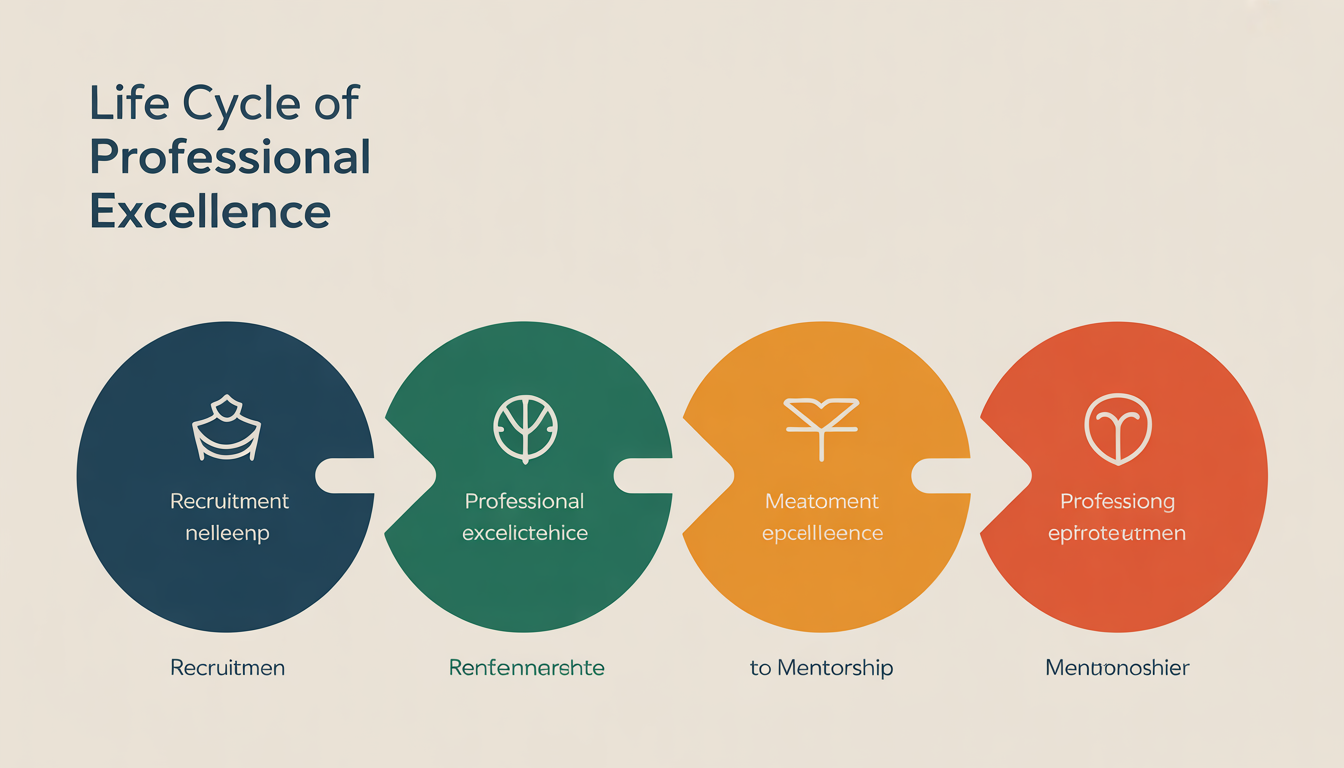
The Workforce Maturity Matrix helps associations match investments to capability levels. It sorts activities across four maturity stages. Stage one centers on basic recruitment. Stage two adds targeted credentialing. Stage three builds integrated apprenticeship and employer networks. Stage four adds performance measurement and continuous improvement.
| Maturity stage | Workforce focus | Coastal-linked trigger | KPI examples |
|---|---|---|---|
| 1 | Hiring volume | Seasonal cargo spikes | Time to fill |
| 2 | Credentials | Safety rule updates | Credential completion |
| 3 | Apprenticeships | Sustained demand | Retention at 12 months |
| 4 | Analytics | Multi-year volatility | Margin of staffing plans |
Associations should run scenario-based ROI. They must estimate reduced overtime, faster vessel turns, and fewer safety incidents. They also must estimate member satisfaction and reduced attrition.
Port policies that alter human capital requirements
Port policies reshape job structures and skill requirements. New gate procedures, appointment systems, and security protocols change how work flows. They also change training content and how supervisors coach new hires. Associations can advise members on those changes early.
Associations should track three policy variables that drive labor implications. First is throughput policy, which affects how quickly cargos move. Second is regulatory policy, which affects compliance training and documentation. Third is infrastructure policy, which affects equipment utilization and maintenance skills.
When associations monitor these variables, they become trusted intermediaries. Members then ask for training calendars and competency frameworks. That trust strengthens association resilience during downturns.
A resilience playbook for trade associations
Resilience requires governance, finances, and workforce capability working together. Coastal economics can turn revenue swings into staff instability. Associations must protect continuity by diversifying funding streams. Dues alone often fail to cover policy staffing across volatility cycles.
Associations should build a resilience playbook around four commitments. Commit one: link training budgets to member demand signals. Commit two: pre-negotiate training seats with employers and schools. Commit three: maintain a surge staffing protocol for peak season. Commit four: establish a compliance-ready training library.
The association leadership must also maintain a disciplined measurement rhythm. It should compare planned staffing outcomes with actuals each quarter. It should publish summary metrics to members. This transparency reduces disputes and accelerates decisions.
Economic Forecasting and Association Planning Cycles
Turning coastal data into association decisions
Associations often receive coastal signals in scattered formats. Members share anecdotes, staff see operational notes, and policymakers release forecasts. Associations must convert these inputs into a unified planning view. They should use a lightweight forecasting cadence. It should combine port performance, shipping schedule trends, and landside capacity.
A practical approach starts with leading indicators. Associations can track booking patterns, chassis availability, and intermodal dwell times. They should also track local labor market conditions. Vacancy rates in logistics occupations provide an early warning.
To make forecasting operational, associations should assign data ownership. A policy lead should own port and regulatory signals. A workforce lead should own labor market and training pipeline data. A finance lead should own scenario budget implications.
Planning horizons aligned to cargo reality
Cargo planning rarely fits quarterly rhythms. Vessel schedules can shift with weather, labor availability, and service disruptions. Associations should set planning horizons that match these cycles. Short horizon planning covers surge staffing and training seats. Medium horizon planning covers curriculum alignment and apprenticeship slots. Long horizon planning covers infrastructure advocacy and workforce system partnerships.
The key is not to over-model. Associations should avoid false precision. They should use ranges and stress tests. They should build plans that remain viable under multiple demand trajectories.
| Planning horizon | Typical coastal use | Decisions associations should make |
|---|---|---|
| 30 to 60 days | Surge labor and training attendance | Seat reservations, overtime controls |
| 3 to 6 months | Curriculum and credential alignment | Vendor contracts, school partnerships |
| 12 to 24 months | Infrastructure and workforce system support | Policy positions, apprenticeship scaling |
Institutionalizing learning from disruptions
Associations must learn from disruptions quickly. Many associations run post-event reports that never change policy. That failure wastes member goodwill and staff time. Associations should implement a structured after-action review cycle. It should focus on repeatable process improvements.
They should adopt a standard template for disruption learning. It should capture trigger, operational impact, workforce constraint, and policy response. It should then assign owners and due dates for corrective actions.
Over time, this routine increases resilience. It also strengthens governance credibility. Members see how the association converts disruptions into concrete improvements.
Labor Pipeline Partnerships Across Ports and Communities
Coordinating multi-employer workforce efforts
Mid-Atlantic trade associations often serve multiple port-adjacent employers. That geographic spread complicates labor pipeline coordination. Employers may compete for the same workers. They may also use different job classifications and credential requirements.
Associations should broker standardized competency frameworks across employers. This reduces confusion for job seekers and simplifies training design. It also helps employers compare candidate readiness fairly.
Associations can start with three shared competency groups. The first group covers safety and compliance documentation. The second covers equipment and operational proficiency. The third covers communication and coordination in gate, yard, and warehouse operations. Associations should tailor details by terminal type.
Training ROI through shared infrastructure and seats
Shared training infrastructure can raise ROI when demand fluctuates. Associations can negotiate training seats and internships with community colleges. They can also coordinate background check processes and onboarding readiness.
Training ROI should account for more than tuition costs. It should include reduced downtime for onboarding. It should include supervisor time spent correcting mistakes. It should include reductions in rework and safety incidents. These factors often drive true savings.
Associations should request employer input on training outcomes. Employers should rate job-ready competence after each cohort. Associations should aggregate those scores and report them to members.
| Training metric | Measurement method | ROI implication |
|---|---|---|
| Time to job readiness | Manager assessment | Reduced ramp costs |
| Retention at 12 months | HR follow-up | Lower replacement cost |
| Safety performance | Incident tracking | Reduced compliance exposure |
| Transfer success | Role mobility checks | Stronger talent utilization |
Aligning community workforce systems with trade needs
Associations must align with workforce development systems that operate on rigid schedules. Local workforce boards, apprenticeship programs, and supportive services often have different eligibility rules. Coastal economics creates urgency, but systems still require documentation and compliance.
Associations can reduce friction by building a referral pathway. They should map eligibility criteria to training programs. They should also clarify expected work hours, physical demands, and shift schedules.
Associations can add supportive services guidance for participants. Transportation assistance and childcare coordination often determine attendance. These supports increase completion rates and improve ROI.
The association should also participate in employer advisory councils. That role lets it translate trade needs into curriculum updates.
Risk, Compliance, and the Association’s Policy Execution Role
Coastal risk patterns that affect compliance demand
Coastal economics includes physical risk and operational risk. Infrastructure stress raises the likelihood of disruptions that trigger compliance scrutiny. Insurance requirements may change after recurring incidents. Port authorities may tighten documentation standards.
Associations should treat compliance training as a continuous pipeline. It should not rely on annual refreshers alone. Compliance requirements can shift due to enforcement changes and new guidance.
Associations can strengthen compliance by creating a policy-to-practice translation process. They can convert regulatory language into job-level checklists. They can then provide those checklists to supervisors and trainers.
The Institutional Impact Scale applied to risk programs
The Institutional Impact Scale can also guide risk investments. Programs that address compliance and safety often have high execution risk. They also require fast rollout to members.
Associations should score risk programs with the same four dimensions. They should treat speed as critical when regulators issue new mandates. They should treat member reach as critical when many terminals face similar compliance changes.
| Initiative type | Speed needs | Member reach | Execution risk | Recommended governance |
|---|---|---|---|---|
| Safety refresher toolkit | High | Broad | Medium | Staff-led update |
| Documentation training webinar series | Medium | Broad | Low | Committee-led |
| Incident response tabletop exercises | High | Narrow | High | Task force with authority |
When boards use this scale, they avoid underfunding or overstaffing.
Executive Implementation Roadmap for coastal compliance and workforce
Associations should adopt an implementation roadmap that integrates policy and human capital. This roadmap should guide decisions from intake to measurable outcomes.
- Week 1 to 4: Build a compliance gap map by regulation category.
- Week 5 to 8: Translate gaps into competency requirements and training modules.
- Month 3: Negotiate seat counts and trainer schedules with employer partners.
- Month 4: Launch a pilot with two member terminals, one intermodal site, one warehouse.
- Month 5: Measure readiness scores, incident proxies, and documentation accuracy.
- Month 6: Scale modules based on ROI and execution learnings.
Associations must assign owners for each step. They should also publish a short monthly progress note to members.
Member Value Delivery and Dues Justification
Linking association services to member operating realities
Members pay dues because they expect measurable value. Coastal economics changes what “value” means. When throughput rises, members want faster workforce access and clearer operational guidance. When throughput declines, they want cost control and risk mitigation services.
Associations can improve dues justification by publishing an outcomes report. It should include training enrollments, credential completion, and retention improvements. It should also include policy outcomes such as adopted guidance and legislative wins.
Associations can also segment value by member type. Port operators, trucking firms, warehouses, and marine service providers face different labor constraints. Segmenting services prevents one-size-fits-all programming.
Benchmarks that members understand
Members respond to clear benchmarks and credible comparisons. Associations should use benchmark tables that show improvement over time. These tables should include baseline and target ranges.
| Labor benchmark | Typical baseline | Target after 12 months | Measurement source |
|---|---|---|---|
| Time to fill critical roles | 60 to 90 days | 30 to 60 days | HR tracking |
| Training completion rate | 65% | 80% | Program attendance |
| 12-month retention | 70% | 78% | HR retention |
| Supervisor readiness score | 3.0 of 5 | 4.0 of 5 | Manager survey |
Associations should update benchmarks quarterly. They should also explain performance drivers, not just results.
Governance communications that protect trust
Coastal disruptions create confusion for members. Associations must communicate with clarity and speed. They should publish guidance on policy changes, training availability, and workforce resources.
Trust grows when associations explain tradeoffs. For example, seat reservations may require member commitments. Associations should outline how those commitments protect training capacity and reduce shortages.
Communication should also manage rumor risk. When schedules change rapidly, misinformation can spread quickly. Associations should issue short statements with official sources and dates.
Workforce Data, Measurement Systems, and Accountability
Building measurement systems that survive staff turnover
Measurement systems often fail when associations depend on one analyst. Associations should design repeatable dashboards with clear data definitions. They should also create documentation for data pulls and validation checks.
Key workforce metrics should include recruitment funnel metrics and retention metrics. They should also include training quality indicators. Safety incident data and compliance documentation accuracy provide meaningful proxies.
Associations should also track labor mobility. Coastal economics can shift demand between terminals and roles. If workers can move successfully, the association’s training design improves.
The Training ROI ledger
Associations should maintain a Training ROI ledger. It ties training activities to operational outcomes. It also supports future funding decisions.
The ledger should capture direct costs, member time investment, and measured outcomes. It should include reduced overtime estimates and reduced recruiting costs.
| Ledger line item | Data input | How associations estimate ROI |
|---|---|---|
| Training delivery cost | Invoices, payroll | Direct cost accounting |
| Overtime reduction | HR reports | Comparison to baseline |
| Recruiting cost reduction | HR hires | Replacement cost estimate |
| Safety incidents change | Safety reports | Risk reduction valuation |
This ledger should be shared with member leadership. It gives boards a fact base for continuing or adjusting programs.
Accountability contracts with partners
Associations should require accountability from training partners. They should define performance expectations for attendance, completion, and post-training readiness.
Associations can use service-level agreements for program execution. These agreements should define how quickly partners respond to schedule shifts. Coastal economics often requires rapid changes to training calendars.
When accountability increases, associations reduce rework. They also protect participant experience. That protection improves completion rates and strengthens labor supply credibility.
Executive FAQ
1) How exactly does coastal economics change labor demand for Mid-Atlantic employers?
Coastal economics changes labor demand through volume volatility, vessel scheduling, and infrastructure constraints. When cargo volumes rise, employers need more frontline operators, dispatch support, and safety documentation staff. When volumes fall, employers still need compliance-ready staff and cross-trained workers who can shift roles quickly. Weather and tide-related impacts also change shift patterns, which affects attendance requirements and training scheduling. Associations translate those shifts into training seat planning, credential updates, and supervisor readiness programs. They also help employers standardize competency expectations so hiring decisions remain consistent across terminals.
2) What should associations prioritize when members face both workforce shortages and rising compliance costs?
Associations should prioritize initiatives that reduce risk and reduce vacancy time simultaneously. They should start with competency frameworks that map compliance tasks to job roles. Next, they should fund training that builds documentation accuracy and safety readiness, not just general orientation. Then, they should negotiate training seats with employers during peak seasons. This approach reduces time-to-job readiness. It also lowers rework and incident likelihood. Associations should measure outcomes with readiness scores and early retention results. Boards should avoid funding programs that lack clear linkage to hiring speed, safety performance, or compliance accuracy.
3) How can associations forecast coastal disruptions without claiming false precision?
Associations should forecast with ranges and stress tests, not point predictions. They should use leading indicators like booking patterns, gate appointment capacity, and intermodal dwell times. They should also incorporate weather trend summaries and infrastructure maintenance calendars. Associations can run three scenarios, base, high-disruption, and low-disruption. Each scenario should map to staffing and training actions, such as surge seats or credential refreshers. This method avoids overfitting. It also builds decision discipline. Members understand the logic because associations communicate triggers, not just forecasts.
4) What is the biggest governance failure associations make during coastal volatility?
The biggest failure is slow decision authority during operational shocks. Many associations route urgent decisions through long committee cycles. They also fail to assign clear owners for workforce and policy actions. As a result, members experience training delays and inconsistent guidance. Boards can reduce this failure by setting predefined thresholds. When a threshold triggers, staff gains authority to act within budget limits. The association should also adopt after-action reviews with due dates. This converts disruption into process improvements, rather than repeating the same pattern.
5) How should associations justify dues increases, if coastal conditions make budgets unpredictable?
Associations should justify dues increases with outcome evidence and a portfolio approach to budgets. They should publish annual and quarterly performance summaries using workforce and compliance metrics. They should also show how each program links to member constraints such as time-to-fill and incident reduction. Boards should separate baseline services from volatility programs, then explain which parts scale with demand. Associations can also offer member-level dashboards so each stakeholder sees progress. This transparency reduces political friction and protects trust during uncertain coastal cycles.
6) What training designs perform best under coastal scheduling volatility?
Training designs that include modular credentials and rapid onboarding perform best. Associations should structure content into repeatable modules with clear prerequisites. They should also schedule cohorts around predictable port operational windows. For example, safety and documentation modules can run frequently, while equipment skills can run in seasonal bursts. Associations should integrate supervisors into training so coaching remains consistent. Blended delivery can also help when attendance windows shrink. Measurement should verify readiness immediately after training. That verification supports scaling decisions without waiting for annual outcomes.
7) How can associations coordinate across multiple ports without wasting resources?
Associations should create shared competency frameworks and shared training assets. They should then customize terminal-specific elements. This method prevents duplication of basic compliance and safety content. Associations should also run capacity planning at the portfolio level, not port-by-port only. When one port faces a shortage, the association can redirect training capacity or shift recruitment targeting. Governance also matters. Associations should assign a portfolio workforce lead who coordinates calendars and seat allocation. That clarity reduces conflicts between member companies and improves utilization of training seats.
8) Which metrics best signal workforce ROI in the first six months?
Associations should track early signals that predict long-term retention. The most useful first-six-month metrics include time to job readiness, training completion rates, and early performance checks from supervisors. They should also track reduced onboarding rework and improved documentation accuracy. Attendance and schedule reliability matter in volatile coastal settings. Associations can measure the percentage of trainees who achieve supervisor-defined competence by week six. They can also track vacancy reduction in targeted roles and reductions in overtime associated with those roles. These metrics often show momentum quickly.
Conclusion: The Impact of Coastal Economics on Mid-Atlantic Trade Associations
Coastal economics changes the operating tempo of Mid-Atlantic trade, and it changes how trade associations must govern. Associations that connect coastal indicators to workforce planning usually deliver faster job readiness and stronger compliance outcomes. Those that align port policy tracking with training design reduce rework, reduce incident risk, and stabilize staffing through volatility. They also improve dues justification through measurable results.
For boards and executives, the final sector outlook stays clear. Expect more frequent disruptions, more compliance updates, and more variability in labor availability. Associations will win trust when they run disciplined forecasting, publish transparent workforce outcomes, and maintain authority for rapid response. The most resilient institutions will treat workforce ROI as a continuous system, not a seasonal program. They will also build partnership pipelines that can shift capacity across ports without losing standards.