
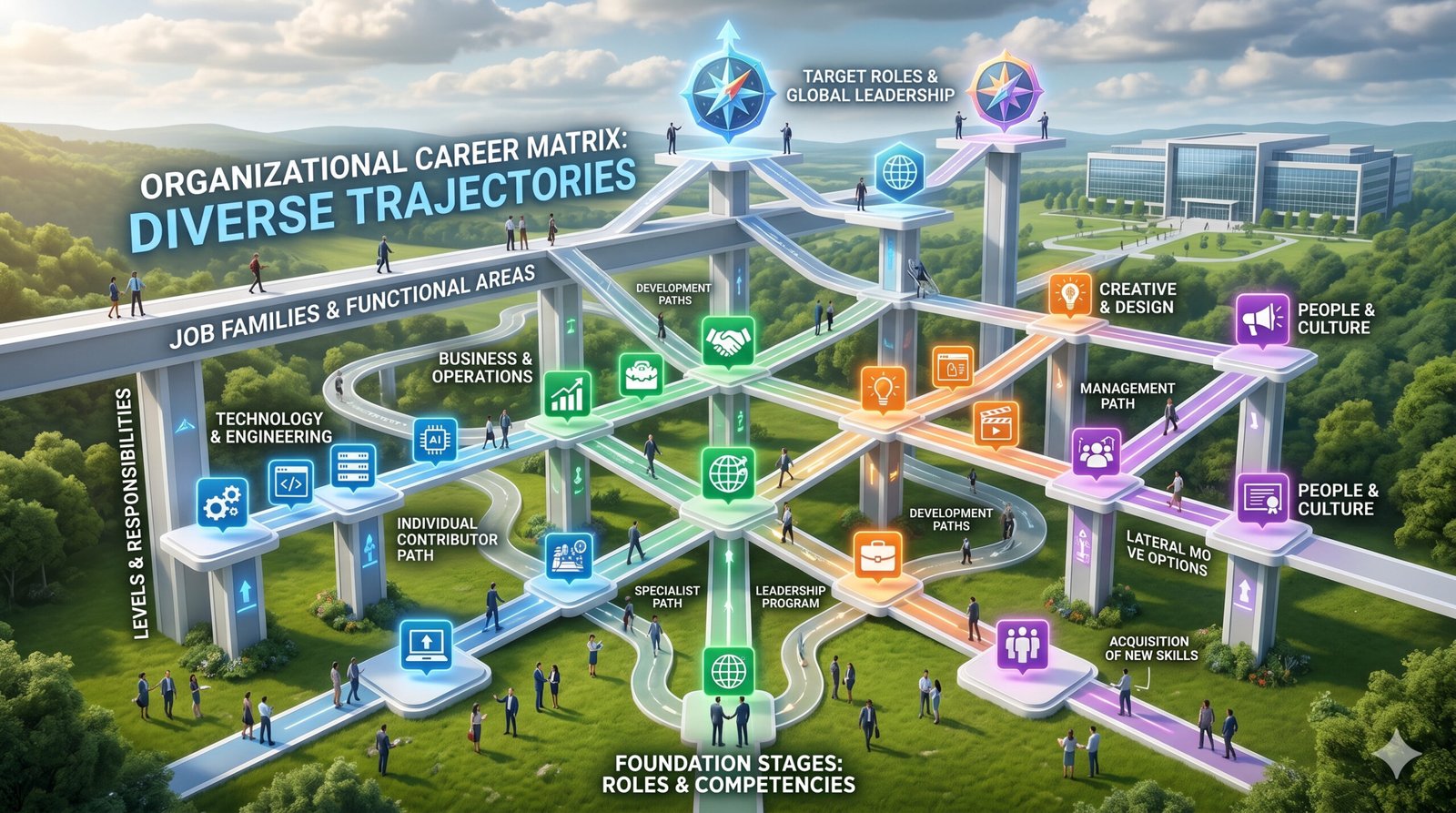

From Recruitment to Retention, workforce planning to skills sustainment, professional excellence does not appear by chance. Organizations build it through a connected life cycle that starts at hiring signals and ends at retention outcomes. When institutions treat recruitment and retention as separate activities, they pay hidden costs in turnover, quality slippage, and weak succession. This report frames excellence as a governed system for economic resilience. It links institutional policy, workforce development ROI, and human capital strategy into one operating model.
The life cycle creates measurable value when leaders manage four transitions: attraction, onboarding, growth, and retention. Each transition carries failure modes and governance risks. Executive teams can reduce those risks by installing standards for selection, apprenticeship-like onboarding, and evidence-based development. They can also align incentives across HR, line management, and finance. This approach supports continuity of service, stable productivity, and lower volatility in labor markets.
You will find practical tools in the sections that follow. You will also find an original diagnostic model and an implementation roadmap. Together, they help executives design a coherent system that strengthens capability over time.
From Hiring Signals to Onboarding That Last
Translate labor-market signals into selection criteria
Professional excellence starts when organizations interpret hiring signals correctly. Leaders must move beyond generic competencies and define job-critical behaviors tied to output. They should also map role demands to labor supply realities. In tight markets, poor signaling increases cost per hire and also increases early attrition. In loose markets, weak signals elevate quality drift.
A rigorous approach begins with a competency-to-deliverable map. Managers list the measurable work products the role must produce. HR then converts those products into structured interview prompts, work sample tests, and reference checks. This reduces reliance on resume narratives. It also reduces bias by standardizing evaluation. Organizations should validate criteria with line leaders during hiring calibration.
Executives should monitor selection performance like a portfolio. They track time-to-fill, but also quality-of-hire and ramp-to-productivity. Quality-of-hire metrics include manager ratings at 90 days, first-quarter performance attainment, and error rates in controlled tasks. These indicators predict later retention outcomes. They also support budget discipline.
Design onboarding as a capability system
Onboarding fails when organizations treat it as administrative orientation. It succeeds when it behaves like a short capability program. New hires need clarity on decisions, access to tools, and safe practice under mentorship. Organizations also need a feedback cadence so early gaps surface fast.
High-performing onboarding includes three tracks. Track one covers role mechanics, data access, and governance rules. Track two covers operational craft, through shadowing and guided practice. Track three covers culture of performance, through expectations, ethics, and collaboration norms. Each track uses small deliverables. Examples include completing a first case under supervision, passing a compliance checkpoint, and producing a written process summary.
Institutions should aim for fast “minimum viable competence.” That target means new hires can complete real tasks with supervision. It also means they understand when to escalate. This structure reduces rework and lowers manager overload. Over time, it supports retention by improving confidence and role fit.
Use metrics to reduce early churn
Early churn often signals selection mismatch, onboarding gaps, or manager capability deficits. Leaders should define early warning thresholds. For example, if an employee misses onboarding milestones, the organization should intervene quickly. Intervention can include coaching, training extensions, or reassignment to a different work stream.
Consider a common benchmark pattern. Organizations can observe that hires leaving within the first six months correlate with weak onboarding design. They also correlate with unclear success criteria. By tracking milestone attainment, organizations can connect causes to corrective actions.
Table 1 compares typical indicators across onboarding maturity levels.
| Onboarding maturity level | 90-day productivity attainment | First-6-month attrition | Typical root cause | Priority fix |
|---|---|---|---|---|
| Basic orientation | 45-60% | 18-25% | Unstructured training, unclear escalation | Structured milestones and mentors |
| Standardized program | 60-75% | 10-16% | Inconsistent manager support | Manager onboarding coaching |
| Performance-based system | 75-90% | 5-10% | Skills not practiced in real tasks | Work samples, supervised delivery |
| Excellence operating model | 85%+ | 2-6% | Low signal-to-noise in onboarding | Continuous onboarding analytics |
Organizations can also compute an onboarding ROI proxy. Use reduced rework costs and fewer managerial corrections. Then compare those savings to onboarding investment. This approach supports governance discipline.
Retention Programs That Sustain Professional Excellence
Build retention around drivers, not slogans
Retention requires diagnosis. People stay for reasons that connect to daily work. Those reasons include growth, psychological safety, fair workload, and predictable advancement paths. Organizations should not rely on generic benefits announcements. They should translate retention drivers into program elements.
A retention program should also match labor segment realities. Employees in early career stages care about learning velocity and mentorship. Mid-career employees care about meaningful scope and leadership reliability. Senior staff care about autonomy, succession roles, and strategic visibility. Leaders should tailor retention actions by segment. They should also tailor by performance tier.
To operationalize this, organizations can deploy the Workforce Maturity Matrix. It scores each business unit across five dimensions. Those dimensions are hiring signal strength, onboarding effectiveness, skill growth structure, manager operating system, and internal mobility. The matrix then assigns maturity tiers and prioritized actions.
Establish manager capability as retention infrastructure
Line managers often determine retention outcomes. They control feedback quality, workload balance, and learning access. Organizations should treat managerial capability as infrastructure. They should also govern it with training and performance expectations.
A strong manager system includes weekly one-on-ones, transparent goal setting, and documented development plans. Leaders also set norms for workload distribution. They should install escalation rules for high-risk stress patterns. These rules reduce burnout-driven attrition.
Organizations can also implement manager scorecards. Scorecards include employee engagement trend, internal mobility uptake, development plan completion, and fair performance calibration. HR audits these scorecards for consistency across teams. Finance audits for budget alignment, especially where workload varies.
Create learning and career pathways with measurable outcomes
Retention strengthens when employees see a credible path. Those paths need concrete milestones and transparent criteria. Organizations should build career ladders that describe progression by skill and impact. They should also link training to future work opportunities.
Leaders can design “learning sprints” that end in assessed capability. For example, an analyst might complete a data governance module and then lead a controlled reporting cycle. That cycle produces a measurable deliverable. It also proves competence.
Table 2 shows a training ROI benchmark structure.
| Training program type | Typical cost per participant | Measured improvement | Time horizon | Retention linkage metric |
|---|---|---|---|---|
| Technical upskilling | $1,200–$2,500 | 10–20% error reduction | 3–6 months | Fewer early demotions, higher engagement |
| Leadership coaching | $2,000–$6,000 | 5–10% cycle-time reduction | 6–12 months | Lower regrettable attrition |
| Apprenticeship mentoring | $3,000–$8,000 | 15–25% ramp speed | 6–9 months | Higher internal mobility |
| Cross-functional rotations | $1,500–$4,000 | 8–15% decision quality | 6–18 months | Reduced role stagnation |
Executives should connect learning to internal mobility. When roles open, employees should have a documented route to qualify. That route reduces external hiring churn. It also preserves institutional knowledge.
Governance and Institutional Capacity for Human Capital Strategy
Align HR, finance, and operations in a single governance model
Governance fails when each function optimizes separately. HR focuses on staffing speed, while finance focuses on unit cost, and operations focuses on workload stability. Retention suffers when these objectives conflict. Leaders should establish a workforce governance council with shared metrics.
The council should set annual workforce plans. Those plans should include scenario modeling for labor supply shifts, demand volatility, and skill shortages. They should also include an operating cadence for program review. A quarterly rhythm supports course correction without disruption.
Leaders should also define accountability. HR owns selection quality standards, but line leaders own onboarding practice and development follow-through. Finance owns cost modeling and budget discipline. Operations owns capacity planning and work design constraints.
Install audit trails for selection, development, and fairness
Fairness is not a compliance add-on. It reduces attrition by improving trust in processes. It also protects institutional reputation and reduces legal risk.
Organizations should audit hiring processes for adverse impact and procedural consistency. They should also audit training access by demographic and performance tier. If audits reveal disparities, leaders must adjust selection criteria and development pathways.
Development audits should also verify that employees receive the promised learning time. For example, organizations might commit to 10 learning hours per month. They should then verify it through time capture or manager certification.
Use a policy-to-outcome framework for measurable accountability
Institutions need a policy-to-outcome logic chain. Leaders can use the Institutional Impact Scale. This scale links governance actions to measurable human capital outcomes.
The scale includes five levels. Level one includes policy presence, like documented onboarding standards. Level two includes policy adoption, like manager completion rates. Level three includes process integrity, like mentor assignment quality. Level four includes capability outputs, like assessed skills. Level five includes business outcomes, like retention and service quality.
This framework helps executives prioritize investments. They can also avoid over-indexing on outputs that do not impact retention.
Economic Resilience Through Workforce Continuity
Treat workforce planning as continuity planning
Economic resilience depends on workforce continuity. Hiring alone cannot stabilize service delivery when retention collapses. Organizations should plan for both inflows and outflows. They should also plan for time lags between hiring and productivity.
Leaders should build retention scenarios into workforce models. For example, they can model retention rates by role family and by manager performance bands. They can then simulate staffing needs under different attrition assumptions.
This approach supports contingency planning. If a competitor recruits aggressively, leaders can strengthen retention levers first. Then they can scale hiring with targeted incentives only where necessary. This prevents cost spikes and preserves culture.
Reduce volatility with internal mobility and skill redundancy
Internal mobility reduces reliance on external hiring. It also provides growth paths that strengthen retention. Organizations can build skill redundancy by training employees across adjacent tasks. That training supports resilience during demand surges or disruptions.
However, mobility requires governance. Employees need clarity on eligibility and timing. Managers need workforce visibility to avoid surprise coverage gaps. HR needs capability maps to align skills with roles.
Organizations can also create a “talent bench” system. It groups employees by assessed readiness for critical roles. The system includes development plans for gaps. Leaders then fill openings using readiness scores, not only tenure.
Protect service quality during workforce transitions
Transitions threaten quality when knowledge leaves with attrition. Organizations should implement structured knowledge capture. They should also ensure new hires inherit clean procedures.
Quality protection includes playbooks, decision logs, and escalation matrices. It also includes cross-training so fewer people become single points of failure. These controls improve reliability and reduce customer risk.
Executives should measure service quality during onboarding and post-onboarding periods. They can track defect rates, complaint volumes, and cycle-time changes. These metrics then connect to training program adjustments.
Hiring Signals: Attraction, Selection, and Quality-of-Hire
Strengthen employer value through evidence-based messaging
Attraction improves when organizations communicate accurate role realities. Candidates respond to clarity about workload, growth, and performance expectations. When messaging oversells, organizations increase early churn.
Leaders should craft employer value propositions from internal data. They can use employee interviews, exit interviews, and internal mobility outcomes. They should also include specific evidence, like training hours and mentorship structure.
Attraction also benefits from market segmentation. Different candidate groups respond to different message drivers. For example, experienced hires value scope and autonomy. Early career candidates value training and mentorship. Organizations should align channels accordingly.
Use structured selection to improve match quality
Structured selection reduces randomness. It also increases fairness. Leaders should standardize interviews with job-relevant prompts and scoring guides.
They should also combine selection methods. Use work samples for practical roles. Use scenario questions for roles requiring judgment. Use reference checks for integrity and collaboration reliability.
Organizations should then monitor selection outcomes. They can evaluate the correlation between selection scores and early performance attainment. They can also evaluate prediction errors. When mismatch occurs, leaders should revise criteria.
Calculate quality-of-hire with a practical scorecard
Quality-of-hire measures whether hiring investment converts into sustained performance. Many organizations underuse it because it feels complex. Leaders can simplify it into a scorecard with three components.
The scorecard should include performance attainment at 90 days, adherence to process quality, and manager-rated collaboration. These components predict later engagement and retention.
Table 3 illustrates a quality-of-hire scorecard design.
| Component | Measurement window | Scoring method | Why it predicts retention |
|---|---|---|---|
| Performance attainment | 60-90 days | Output vs target | Confirms role fit and capability |
| Process quality | First quarter | Error rate and audits | Reduces frustration and rework |
| Collaboration reliability | 60-180 days | Manager rating and peer inputs | Predicts team integration success |
When executives track this scorecard, they can adjust sourcing and selection methods faster. They can also reduce hiring costs by improving early success.
Onboarding That Builds Capability and Belonging
Build onboarding around real work, not only training sessions
New hires learn faster when they participate in real workflows. Organizations can design onboarding “work tracks” that mirror actual responsibilities. Each track ends with an assessed deliverable.
Leaders should also provide controlled autonomy. Candidates should attempt tasks, then receive feedback. That cycle supports mastery without sacrificing service quality.
This method also builds belonging. New hires feel they contribute to the institution early. That perception increases retention by strengthening identity alignment.
Establish mentorship with clear roles and time budgets
Mentorship succeeds when it has structure and capacity. Many programs fail because mentors volunteer without time protection. Organizations should assign mentors with workload adjustments. They should also set mentor expectations for meeting frequency and coaching outputs.
Mentors need templates. Templates include onboarding checklists, feedback rubrics, and escalation paths. When mentors use templates, coaching quality becomes consistent across teams.
Organizations should also train mentors. They need skills in coaching, feedback delivery, and bias awareness. Those skills reduce emotional risk for new hires.
Use continuous feedback loops to correct course early
Organizations should run onboarding with weekly pulse checks. Those checks track confidence, clarity of expectations, and access to resources. They also capture blockers that slow progress.
Leaders should act on pulse findings. They should resolve tool access issues, clarify process rules, and rebalance workloads. When organizations act quickly, new hires experience psychological safety.
Executives should also collect structured onboarding outcome data. Use completion rates, milestone attainment, and early performance. Then connect those outcomes to program redesign.
Workforce Development ROI and Training That Transfers
Link training investments to capability outcomes
Training ROI fails when leaders measure only attendance. Organizations should measure capability transfer. That means leaders must define what learners can do after training.
They should then test skills through work samples, simulations, or assessed deliverables. These assessments must occur soon after training. They also must occur in real contexts where performance matters.
Leaders should also track the “time-to-competence” metric. Time-to-competence measures how quickly employees reach independent performance. It links directly to onboarding and retention because frustration often drives attrition.
Build apprenticeship systems for critical roles
Apprenticeship systems work because they couple learning with delivery. They also distribute tacit knowledge. Organizations can implement apprenticeships through rotating shadow assignments and supervised task ownership.
Leaders should identify critical roles and define the apprenticeship curriculum. The curriculum should map to role deliverables and governance standards. It should also include assessments at each stage.
Organizations should budget apprenticeships like operational capacity. When leaders underfund mentorship, apprenticeships collapse. When leaders fund it properly, retention improves because employees feel invested in.
Measure ROI across short and long time horizons
Training ROI often spans multiple quarters. Executives should avoid chasing short-term gains that ignore learning latency. Instead, they should measure early leading indicators and then confirm with lagging outcomes.
Leading indicators include confidence scores, skill assessment performance, and reduced rework. Lagging outcomes include retention stability, reduced quality incidents, and faster productivity ramp.
Table 4 shows a sample ROI measurement plan.
| Time horizon | Metric type | Examples | Decision use |
|---|---|---|---|
| Weeks 1-6 | Leading | onboarding milestone progress | Fix blockers quickly |
| Months 3-6 | Capability | assessed skill performance | Adjust training design |
| Months 6-12 | Performance | cycle-time, error rates | Validate training transfer |
| 12-24 months | Retention | attrition by cohort | Confirm program value |
This design supports governance credibility with finance and operations.
Executive Implementation Roadmap and Policy Audit
Executive Implementation Roadmap
Organizations need a phased plan that respects operational realities. The roadmap below assigns actions to governance bodies. It also sets timing windows so leaders can deliver results.
Phase 1, Weeks 1-6:
- Set workforce governance council with shared metrics.
- Define job-critical behaviors and selection scorecards.
- Audit onboarding milestones and mentor capacity.
Phase 2, Weeks 7-12:
- Pilot work-tracks onboarding in two role families.
- Launch quality-of-hire scorecard with 90-day review.
- Implement weekly onboarding pulse checks.
Phase 3, Months 4-9:
- Create skill maps and training transfer assessments.
- Build internal mobility eligibility rules.
- Train managers on retention drivers and coaching loops.
Phase 4, Months 10-18:
- Run quarterly retention reviews by segment.
- Audit fairness in selection and learning access.
- Scale apprenticeship system for critical roles.
Policy audit checklist for recruitment to retention coherence
Executives should run policy audits to ensure recruitment and retention align. The checklist below helps identify common gaps. It also helps leaders quantify repair needs.
| Policy element | Audit question | Evidence required | Likely failure pattern |
|---|---|---|---|
| Selection criteria | Do we define deliverables, not vague traits? | competency-to-deliverable map | Interviews ignore work reality |
| Onboarding design | Do we include assessed work-tracks? | milestone outcomes | Orientation dominates onboarding |
| Mentorship capacity | Do mentors receive time protection? | mentor time budgets | Mentors lack follow-through |
| Feedback cadence | Do teams use weekly pulse checks? | pulse logs | Problems persist until reviews |
| Mobility governance | Do employees know qualification paths? | readiness and eligibility rules | Roles fill externally by default |
| Development transfer | Do we test skills in context? | work sample assessments | Training ends at attendance |
This audit supports decisive governance. It also creates a shared language across functions.
Retention Analytics: Turning Data into Action
Build an evidence base for retention drivers
Retention analytics should focus on causal hypotheses. Leaders should not only visualize attrition rates. They should also test which practices reduce it.
Start with cohort analysis. Segment attrition by hiring cohort, role family, manager band, and onboarding completion patterns. Then examine correlations with quality-of-hire scores and milestone attainment.
The goal is to detect patterns. For instance, if employees with high selection scores still churn, the issue may shift to onboarding quality or manager workload. If employees with low selection scores churn quickly, selection criteria need recalibration.
Link analytics to operational interventions
Data must reach operational decisions quickly. Leaders should define triggers for action. Examples include high onboarding pulse anxiety, declining manager engagement scores, or increased rework rates.
Organizations can use “retention routing.” When a trigger occurs, the workflow routes actions to the right owner. HR handles training access and onboarding design. Operations handles workload and process friction. Managers handle coaching and goal clarity.
This structure reduces delay. It also reduces finger-pointing.
Establish benchmarks and learning loops across units
Benchmarking improves learning across business units. Leaders should compare retention and performance outcomes for similar role families. They should also compare onboarding completion rates and mentorship coverage.
Organizations should then run cross-unit retrospectives. Teams exchange onboarding templates, mentor models, and training transfer assessments. This creates institutional learning, not one-off successes.
A consistent benchmark cadence supports resilience. It also strengthens governance legitimacy with leadership.
Executive FAQ
1) What counts as “quality-of-hire” in a retention-focused model?
Quality-of-hire connects selection outcomes to later performance and retention. You can operationalize it with three components: 90-day performance attainment, process quality audit results, and manager-rated collaboration reliability. Each component should use structured, comparable scoring methods. You should then validate predictions using cohort tracking for at least two quarters. When quality-of-hire rises, early churn typically falls because role fit improves and onboarding expectations align. When quality-of-hire fails to predict retention, you should audit onboarding milestones and manager operating systems. Selection then becomes a partial explanation, not the whole cause.
2) How do we avoid hiring faster but retaining worse?
You prevent this by separating speed metrics from capability readiness metrics. Track time-to-fill, but do not manage only that. Require work-tracks onboarding milestones before full independence. Use manager capacity planning so teams can coach new hires without overload. Also implement structured selection with work samples to reduce mismatches. Then test the hiring pipeline through 60- and 90-day outcomes. If ramp speed declines or early attrition rises, leaders should slow intake in impacted role families. They should also recalibrate interview scoring weights. The goal remains economic stability, not volume at any cost.
3) Which onboarding design features most strongly influence early churn?
Onboarding features that drive early retention include assessed work-tracks, clear escalation rules, and mentorship with time protection. Pulse feedback loops also matter because they identify blockers before frustration hardens into disengagement. You should also set explicit “minimum viable competence” targets for the first 30 to 60 days. When employees reach those targets, they experience confidence and reduced error risk. Additionally, you should align onboarding deliverables to the actual work that the role performs. If onboarding teaches theory without practice, employees struggle later. That struggle increases performance pressure and drives turnover.
4) How should HR measure training ROI without falling into attendance-only metrics?
You measure training ROI by testing capability transfer. Define what learners can do after training, then assess it through work samples, simulations, or supervised delivery in real workflows. Use time-to-competence and reduced rework as leading indicators. Then verify with lagging outcomes like quality incident rates and retention stability by cohort. ROI models work better when you connect program costs to measurable reductions in error, cycle time, or replacement hiring needs. You should also separate effects by role family. Different roles respond differently to training intensity. This ensures decisions stay grounded in evidence.
5) What role do managers play in retention compared with HR programs?
Managers often act as the retention system’s operating layer. HR can design onboarding standards and training pathways, but managers control daily experience through feedback quality, workload balance, and access to stretch work. If managers run unclear goal settings, employees struggle and disengage. If managers lack coaching, employees feel unsupported. You should therefore include manager capability measures in your retention governance. Use manager scorecards that track one-on-one cadence, development plan completion, and fair calibration signals. Provide targeted manager coaching for high-risk segments. This approach turns retention from a program into a management practice.
6) How can internal mobility reduce turnover without creating internal resentment?
Internal mobility works when you establish transparent qualification rules and communicate timing. Employees should understand eligibility criteria based on assessed readiness and learning milestones. You should also manage workload planning so mobility does not create coverage gaps that overload remaining staff. Additionally, leaders should run development plans that apply to both current-role excellence and future-role readiness. When employees see that mobility requires capability, not favoritism, trust increases. You should also balance mobility across performance tiers to prevent perceptions of exclusion. Finally, you need a feedback mechanism so employees can understand why they are not yet ready. That clarity reduces resentment and supports persistence.
7) What is the fastest policy audit that surfaces recruitment-to-retention gaps?
A fastest audit uses a targeted checklist and evidence requests. Start with selection criteria mapping to deliverables. Next confirm onboarding includes assessed work-tracks with milestone outcomes. Then verify mentor capacity and time protection. After that, audit feedback cadence through pulse logs. Finally, check mobility governance via readiness rules. You should request documentation and also sample outcomes for a recent cohort. When evidence mismatches outcomes, leaders identify the operational bottleneck quickly. This process reduces time spent debating abstract issues and focuses the organization on measurable repair actions. You can typically complete a meaningful audit within four to six weeks with executive sponsorship.
Conclusion: From Recruitment to Retention: The Life Cycle of Professional Excellence
From recruitment to retention, professional excellence emerges when organizations manage workforce capability as a single governed system. Executives should connect hiring signals to selection scorecards, then connect onboarding to assessed work-tracks and mentorship capacity. They should also build retention through manager operating systems, transparent career pathways, and learning transfer that proves capability in real work.
The strategic takeaways are straightforward. First, treat quality-of-hire and onboarding milestones as early indicators of retention risk. Second, install governance that aligns HR, finance, and operations around one outcomes dashboard. Third, invest in apprenticeship-like development for critical roles, because it converts institutional knowledge into repeatable capability. Fourth, use retention analytics for targeted interventions, not broad morale campaigns.
Final Sector Outlook: Over the next several years, labor markets will remain uneven by geography and occupation. Institutions that manage the full life cycle will gain economic resilience and stable productivity. Those institutions will also reduce replacement costs and protect service quality during demand shocks. Organizations that separate recruitment from retention will keep paying for avoidable churn and inconsistent performance.