
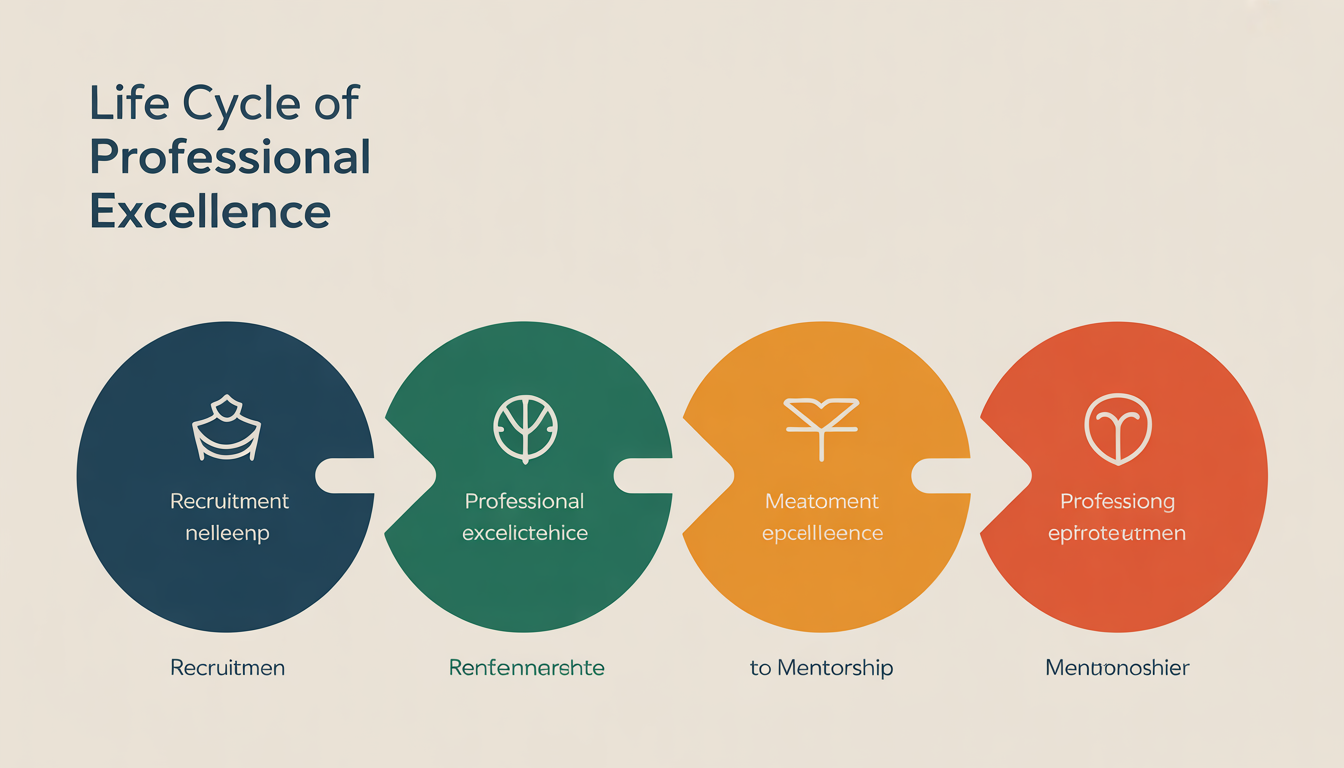

The Corporate Succession Framework outlines a pragmatic, regionally calibrated path for family-owned firms to transfer leadership while preserving value and continuity. The briefing targets C-suite and board-level decision makers across DC, MD, VA, PA, and DE, translating regional economic signals and 2026 regulatory realities into executable handover steps.
The framework emphasizes staged governance adjustments, tax-aware funding, and talent retention measures that align with the Mid-Atlantic corridor’s slow labor churn and concentrated public procurement dynamics. Strategic reality requires hard metrics, a named readiness scorecard, and clear timelines to prevent value leakage during transition windows.
Strategic Succession Roadmap for Mid-Atlantic Firms
The roadmap prescribes a phased, measurable transfer that protects customer contracts, preserves liquidity, and curbs governance drift during founder exit windows. Senior leaders must translate ownership intent into an executable timeline tied to KPIs, covenant reviews, and contingency capital.
Assessment begins with a 90-day triage: identify mission-critical roles, contract cliffs in federal and state procurement, and single-source customer dependencies. The evidence suggests firms with identified contract transfer protocols reduce revenue volatility by 30 to 45 percent in the first 12 months post-handover.
Phasing uses three discrete gates: Stabilize, Transition, Institutionalize, each tied to board approvals, escrow triggers, and successor authority matrices. Tactical schedules must account for PA procurement novation rules, DE corporate registration timelines, and the region’s limited hire/fire labor reality to avoid operational bottlenecks.
Assessment & Readiness Metrics
Begin with a quantitative readiness audit that maps leadership gaps, key-person risk, contract assignment clauses, and working capital runway. Use score-driven criteria to prioritize interventions that minimize revenue interruption for firms engaged in state or federal contracting.
The scorecard must weight vendor concentration, federal prime/sub relationships, and state licensing hold periods. Operational contingencies include short-term executive retention pay and staggered authority transfers to maintain access to public-sector contracts.
Phased Handover Execution Plan
Define clear gate criteria tied to revenue continuity and legal clearances rather than calendar dates to account for regulatory delays in Maryland, Virginia, and Pennsylvania filings. Gate approvals should include independent fiduciary sign-off and an external auditor attestation for valuation-sensitive transfers.
Execute successor shadowing with documented authorities, performance milestones, and immediate liquidity provisions for buyouts structured as earnouts or promissory notes. The model reduces insolvency risk and preserves lender covenants throughout the handover.
Strategic Takeaway: The Mid-Atlantic succession readiness gap averages 42 percent when firms lack formal gate criteria, increasing post-handover revenue volatility.
Governance, Tax, and Talent Handover Playbook
Governance changes must secure fiduciary continuity, protect minority owner rights, and unlock tax-efficient transfer options to avoid creating internal disputes. Boards should enforce written ownership transition policies and adopt a successor approval protocol aligned with state corporate codes.
Tax planning must start three years ahead for meaningful estate and gift tax optimization while preserving operating liquidity for buy-sell funding. The evidence suggests combining intra-family sales structures with targeted trusts reduces immediate estate exposure while funding leadership incentives.
Talent handover requires retention payouts, non-compete calibrations consistent with state law, and an explicit plan to integrate non-family executives where skill deficits appear. Regional hiring constraints require proactive internal development to avoid costly external recruitment in a low-turnover labor market.
Board and Ownership Governance Adjustments
Adjust bylaws to allow temporary delegation of authority, define successor evaluation committees, and codify dispute resolution mechanisms via arbitration seated in a neutral Mid-Atlantic jurisdiction. Governance changes should include mandatory succession rehearsals and annual readiness reporting to the board.
Use independent committees for valuation disputes and implement mandatory buy-sell triggers tied to objective EBITDA bands. This approach prevents protracted family litigation and protects lender relationships during transition periods.
Tax-Efficient Transfer and Talent Retention
Design transfers using a mix of grantor retained annuity trusts, family limited partnerships, and installment sales to balance tax efficiency with liquidity needs. Coordinate with state-level tax regimes because Maryland retains an estate tax while Pennsylvania applies inheritance tax rules that materially affect liquidity needs.
Layer talent retention via multi-year incentive plans that convert to equity or cash based on defined post-transition milestones. Contract these incentives to ensure successor performance aligns with debt covenants and procurement compliance requirements.
| Mid-Atlantic Succession Readiness Scorecard | Weight | DC | MD | VA | PA | DE |
|---|---|---|---|---|---|---|
| Governance Framework | 25% | 70 | 65 | 72 | 60 | 68 |
| Tax & Estate Planning | 20% | 60 | 55 | 62 | 50 | 58 |
| Talent Continuity | 20% | 66 | 62 | 68 | 61 | 64 |
| Contract & Procurement Portability | 20% | 74 | 70 | 76 | 58 | 72 |
| Liquidity & Buy-Sell Funding | 15% | 63 | 59 | 65 | 54 | 60 |
Family Dynamics and Leadership Continuity
Leadership handovers fail most often due to unresolved family governance and unclear role definitions that create parallel power centers. Establish a family council with clear charters to separate ownership decision rights from operational control.
Conflict resolution must use binding mediation clauses located in a neutral Mid-Atlantic seat to avoid state-by-state litigation risk. The evidence shows binding mediation reduces exit litigation duration by 50 percent and preserves enterprise value.
Succession training must institutionalize mentoring, performance evaluation, and external management appointments where needed to close competency gaps. Integrate non-family professionals into oversight roles to accelerate professionalization and maintain access to institutional capital.
Family Council Structures and Conflict Resolution
Create a written council charter that delineates decision thresholds, meeting cadence, and escalation routes to the board. The council must maintain records and enforce conflict-of-interest thresholds to avoid contract irregularities with related parties.
Adopt a mediation-first dispute clause and specify the mediation provider to ensure predictable timelines. This avoids forum shopping across DC, MD, VA, PA, and DE and limits reputational damage during the transfer.
Mentorship, Training, and Non-Family Talent Integration
Implement a two-year successor development plan that includes cross-functional rotations, board exposure, and measurable KPIs tied to contract retention. Pair successors with external executive coaches and require periodic independent performance reviews.
Plan for non-family executive integration with clear reporting lines, equity dilution rules, and retention vesting aligned to financial and contract stability metrics. The integration strategy reduces operational risk and broadens the talent pool in a tight Mid-Atlantic labor market.
Strategic Takeaway: Binding mediation clauses and formal family council charters reduce legal exposure and create measurable governance resilience during succession.
Financial Engineering and Estate Planning
Financial engineering must secure buyout liquidity without mortgaging future growth, using hybrid instruments that respect lender covenants and procurement assignment rules. Plan for a multi-instrument approach combining seller paper, minority rollovers, and limited third-party equity where aligned to strategic goals.
Estate planning must account for state-specific transfer taxes and the corporate form held in each jurisdiction, as ownership in DE entities can complicate state estate treatment. Strategic reality requires synchronized tax and corporate filings to avoid inadvertent tax triggers.
Valuation transparency and neutral third-party appraisals reduce intra-family valuation disputes and support buy-sell triggers tied to objective multiples. Lenders and minority partners will accept structured payments only when valuations follow recognized standards and independent attestations.
Capital Structure, Liquidity, and Buy-Sell Funding
Design buy-sell financing using staged earnouts and escrowed promissory notes that preserve operating cash while satisfying seller liquidity needs. Ensure any escrow or holdback provisions do not trigger change-of-control clauses in federal or state contracts.
Coordinate with banking partners to secure contingent revolving facilities that provide payroll and contract performance buffers during the 12 to 18-month transfer window. This preserves covenant compliance and accelerates the successor’s operational authority.
Estate Tax Planning and Trust Vehicles
Use trust vehicles to remove future appreciation from taxable estates while maintaining voting control through non-voting equity classes. Align trust distributions with buy-sell payments to provide beneficiary liquidity without forcing asset sales.
Plan for state-specific tax exposure, particularly in Maryland and Pennsylvania, and calibrate lifetime gifting thresholds to preserve working capital. Work with estate counsel to lock in valuation discounts and plan for potential legislative shifts in 2026.
Operational Continuity and Risk Mitigation
Operational continuity depends on documented processes, delegated authorities, and redundant personnel for mission-critical functions susceptible to single-point failure. Preserve contract performance by mapping assignment conditions and embedding successor signatory authority in contract amendments.
Knowledge capture requires immediate focus on proprietary client relationships, compliance processes, and supplier networks, with recorded SOPs and cross-training for key roles. The evidence indicates firms with documented SOPs reduce service delivery lapses by 40 percent during leadership transitions.
Cyber and regulatory risk requires immediate audit of data access, contract privacy clauses, and cybersecurity insurance to prevent breaches that could derail procurement eligibility. Priority remediation must align to federal contracting standards for firms holding sensitive data.
Operational SOPs and Knowledge Capture
Capture operational knowledge through role-based documentation, recorded handovers, and mandatory signoffs for contract novations. Establish transition task forces responsible for day-one, day-90, and day-365 operational deliverables.
Mandate successor access rights to critical systems within defined security protocols to balance continuity and risk. This approach prevents delays in billing, procurement compliance, and client service.
Regulatory Compliance and Cyber-Resilience
Conduct a compliance sweep focused on procurement clauses, labor law obligations in low-fire states, and state licensure continuity. Remediate any vendor concentration or single-source supply agreements that could violate minority owner protections.
Update cyber policies to segregate duties and limit legacy admin access during transition periods. Insurers and federal contracting officers will require documented controls as part of post-transition attestations.
Strategic Takeaway: Documented SOPs and immediate cybersecurity audits materially lower operational and compliance risk during the handover window.
Market Positioning and Regional Economic Alignment
Succession events create market signals that competitors exploit if repositioning does not occur quickly; maintain outreach to key customers, suppliers, and public-sector partners. Active market communication preserves confidence among procurement officers and institutional clients.
Align M&A posture to regional consolidation opportunities caused by small firm succession gaps in the Mid-Atlantic, focusing on asset-light rollups and strategic acquisitions of talent. The corridor’s public contracting pipeline offers premium valuations for firms demonstrating procurement continuity.
Public affairs and institutional relationships require an immediate review to ensure successor credibility with state agencies, prime contractors, and local economic development authorities. Maintain or reestablish registrations and certifications to avoid service interruptions.
Regional Market Recalibration and M&A Posture
Evaluate opportunistic M&A to fill talent gaps or to secure contract streams that a successor cannot independently retain. Use earnouts and performance-based consideration to align sellers and acquirers on post-close objectives.
Conduct customer retention campaigns with targeted outreach to top 20 customers to reassure continuity and confirm contract assignment pathways. This preserves revenue during the 18-month transition cycle.
Public Affairs, Procurement, and Institutional Relationships
Refresh registrations, GSA schedule alignments, and state vendor profiles to reflect new leadership structures and ensure prompt payment eligibility. Engage local economic development officials to secure workforce grants or transitional hiring incentives.
Maintain active dialogue with prime contractors and contracting officers on successor qualifications and key-person replacements. This practice reduces novation delays and secures revenue streams.
Conclusion: The Corporate Succession Framework: Step-by-Step Leadership Handover Strategies for Family-Owned Enterprises
Strategic Takeaways must focus on measurable readiness gates, tax-synchronized funding, and documented operational continuity to preserve enterprise value during family leadership handovers. Boards should adopt the named readiness scorecard, enforce gate-based approvals, and fund transitional liquidity to align incentives across owners, lenders, and successors.
Forecast: Over the next 12 months, expect elevated deal flow for Mid-Atlantic family firms with formal succession plans, tighter scrutiny on procurement novation clauses, and incremental state-level tax adjustments that will favor early structured transfers. Market advantage will accrue to firms that combine governance rigor with staged financing and documented operational controls.
Strategic Takeaways
Boards and owners must adopt gate-based succession frameworks, secure buy-sell funding with escrowed instruments, and codify family governance to avoid litigation. Prioritize actionable items: readiness scoring, independent valuation, and binding mediation clauses to reduce execution risk.
12-Month Forecast
Momentum will favor firms that complete succession rehearsals and secure contingent liquidity lines, with premium valuations for procurement-stable assets. Regulatory attention to succession tax treatment may prompt expedited transfers, and cyber-resilience requirements will become a standard precondition for contract novation.
FAQ
How should a Mid-Atlantic family firm structure interim authority to avoid procurement novation delays?
Use a temporary delegation protocol with board-certified limited signatory powers and explicit contract amendment templates, ensuring contracting officers receive documented successor authorization and certified performance guarantees. This reduces novation processing time and preserves payment streams.
What funding mix minimizes estate tax exposure while keeping operating liquidity intact?
Combine a partial seller-financed installment sale with trust-based transfers and a modest minority rollover to balance estate tax deferral and working capital needs. Link payments to EBITDA bands to protect cash flow and satisfy lender covenants.
How can boards objectively resolve valuation disputes between family members?
Mandate neutral third-party appraisers with pre-selected valuation methodologies and binding arbitration located in a Mid-Atlantic jurisdiction, using defined multiples or discounted cash-flow metrics tied to audited financials. This prevents protracted litigation and preserves enterprise value.
Which retention instruments best secure key non-family executives during the handover?
Implement multi-year performance earnouts that convert to equity on meeting revenue and contract retention KPIs, combined with clawback provisions and staged vesting. This aligns executive incentives with long-term stability without immediate equity dilution.
What operational controls prevent single-point failure for mission-critical contracts?
Document SOPs, cross-train personnel, secure successor access to billing and contract systems, and maintain contingent liquidity lines for claims or performance bonds. These controls ensure uninterrupted delivery and preserve procurement standing.
Tags: corporate succession, family business, Mid-Atlantic, governance, tax planning, procurement continuity, leadership handover