
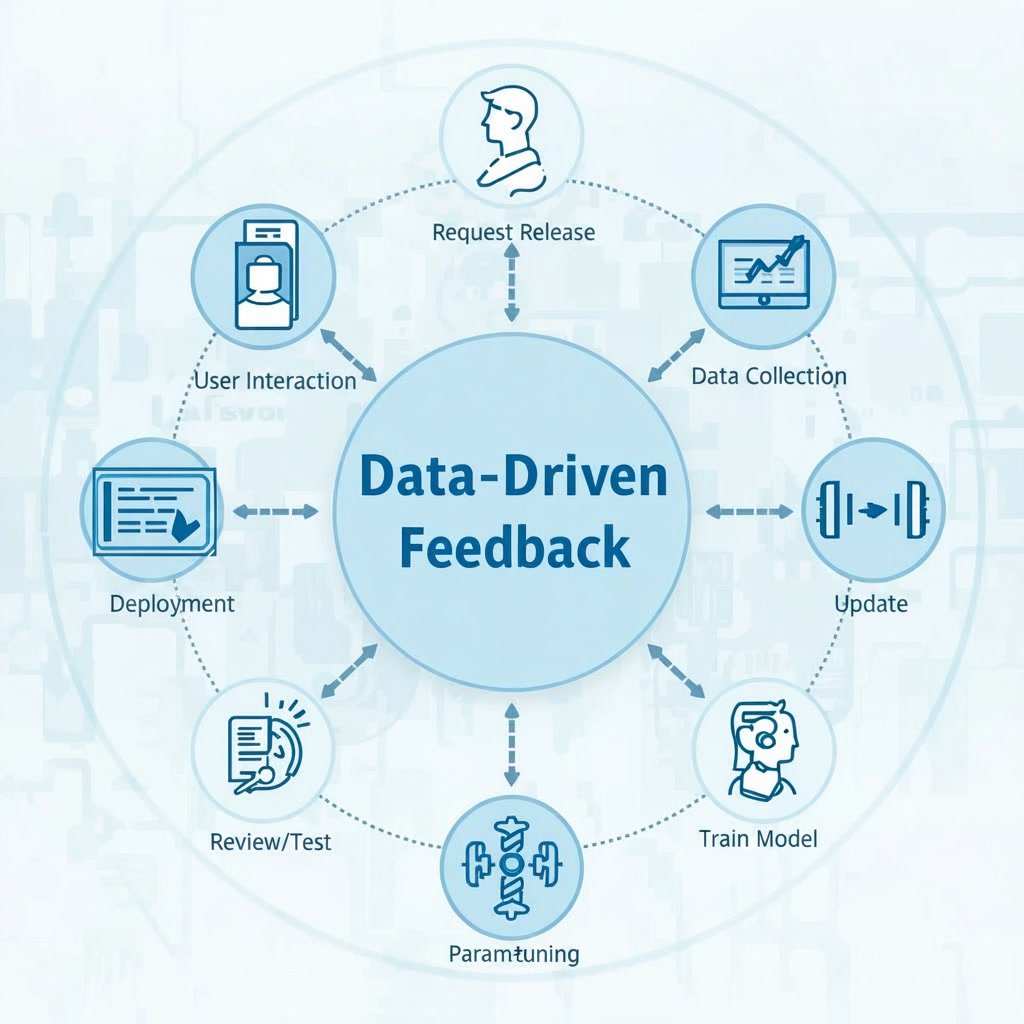

EdTech integration in 2026 will matter less as a procurement trend and more as a workforce resilience strategy. Organizations will use learning technology to raise capability, reduce time-to-competency, and support compliance. Leaders will also protect budgets through governance and evidence-based ROI.
In 2026, training will face stronger economic pressures. Demand will shift faster across sectors. Skills decay will accelerate as tools and processes change. At the same time, governments and regulators will expect measurable outcomes for public and subsidized programs. That forces institutions to move beyond pilots and into scalable systems.
This report frames EdTech integration as an institutional capability. It combines learning analytics, credentialing, instructional design, and workforce planning. It also emphasizes data governance, vendor accountability, and operating models. I write from a senior workforce strategist perspective, with institutional policy constraints in mind.
Workforce needs shift, training must adapt
Workforces will require faster upskilling cycles in 2026. Employers will not wait for annual training calendars when job tasks change weekly. EdTech supports rapid content updates and modular delivery.
Training gains will show up in three places. First, learners will complete training sooner due to blended pathways. Second, managers will apply learning on the job with structured practice. Third, organizations will reduce rework because skill gaps will surface earlier.
Companies will also broaden access. They will serve part-time staff, shift workers, and geographically distributed teams. Mobile learning and microlearning will reduce friction and improve participation.
Measurable improvements across the learning lifecycle
Organizations will capture performance signals across the full learning lifecycle. They will connect registration, content completion, assessment results, and job outcomes. This end-to-end tracking enables continuous improvement.
Common gains will include lower time-to-proficiency and higher retention of key concepts. Many firms will also improve internal mobility. Learners who complete role-based programs will transition into adjacent roles more often.
Still, leaders must avoid vanity metrics. Completion rates alone will not predict job impact. Assessments must align with job tasks, and analytics must link learning to workplace results.
A practical benchmark table for training metrics
Below are representative 2026 benchmarks used in workforce planning. Results vary by sector and maturity, but the pattern holds across industries.
| Metric | Typical baseline (before integration) | Target after integration (mature programs) | Why it improves |
|---|---|---|---|
| Time-to-competency | 10 to 16 weeks | 6 to 10 weeks | Modular pathways and faster assessment |
| Compliance training completion | 70 to 85% | 90 to 97% | Automated scheduling and reminders |
| Skills assessment pass rate | 60 to 75% | 80 to 92% | Better practice and targeted remediation |
| Role transition rate | 5 to 10% annually | 12 to 18% annually | Internal credentialing and talent mapping |
| Training cost per competent learner | Index baseline 100 | 70 to 85 | Reduced rework and right-sized programs |
Governance and ROI Models for Scalable Learning
Why governance will decide scalability
Governance will determine whether EdTech scales safely and sustainably. In 2026, institutions will manage data privacy, intellectual property, and accessibility. They will also standardize reporting across business units.
Without governance, organizations will face fragmented vendor tools. That fragmentation will produce inconsistent assessments and unreliable analytics. It will also increase operational cost and reduce trust in results.
Leaders should assign clear ownership. Training operations, HR policy, IT security, and procurement must coordinate. A single decision forum should approve content, platforms, and measurement standards.
Building ROI beyond cost savings
ROI models will shift in 2026. Organizations will combine direct savings with capability value. They will estimate avoided errors, reduced supervision time, and improved throughput.
A strong ROI model starts with a use-case inventory. Leaders should select programs with clear job impact. They should also document the baseline and measurement window.
Many institutions will use a blended model. It includes learning efficiency gains, quality improvements, and retention effects. The model also assigns uncertainty ranges to avoid overclaiming.
The Workforce Maturity Matrix for prioritization
Organizations will need a maturity lens to plan investments. The Workforce Maturity Matrix offers a structured approach.
The Workforce Maturity Matrix scores five domains on a 1 to 5 scale.
| Domain | Level 1: Ad hoc | Level 3: Managed | Level 5: Optimized |
|---|---|---|---|
| Instruction design | One-time courses | Role maps and rubrics | Task-based performance ecosystems |
| Learning data | Basic completion | Competency scoring and cohorts | Predictive insights and interventions |
| Platform operations | Separate tools | Standard stack and SSO | Unified learning governance and audit trails |
| Content lifecycle | Manual updates | Scheduled review workflows | Continuous improvement with A/B testing |
| Talent integration | Training records only | Credentialing and mobility signals | Workforce planning and skill demand forecasting |
Organizations should start with Level 2 to Level 3 capabilities. That sequence reduces risk while enabling measurable outcomes.
In the next sections, I focus on operating models and data governance controls.
Data, Identity, and Measurement Infrastructure
Establish trusted identity and learning records
EdTech integration depends on identity consistency. In 2026, organizations will unify HR systems, learning records, and credential registries. They will use single sign-on and controlled data flows.
If identity breaks, analytics will misattribute results. That creates compliance exposure and undermines workforce decisions. Institutions should adopt a master data strategy with role-based access.
Leaders should also define data retention rules. They must align with privacy requirements and contract terms. Clear retention policies reduce legal exposure and operational confusion.
Implement assessment design linked to job tasks
Measurement must start at instructional design, not dashboards. Institutions will build assessment blueprints aligned to job tasks. They will use scenario-based questions and performance checks.
Organizations will combine formative and summative assessments. Formative checks will guide remediation during learning. Summative checks will certify readiness for real work.
A key control involves calibration. Teams will verify that assessments remain stable across cohorts. They will also monitor item performance and update content when needed.
Use an Institutional Impact Scale to grade outcomes
Organizations need a consistent outcomes framework for reporting. The Institutional Impact Scale grades results across four levels.
| Level | Outcome type | Evidence required | Typical metric examples |
|---|---|---|---|
| 1 | Learning outputs | Completion and attendance | Course completion rate, practice time |
| 2 | Competency gains | Assessment performance | Pass rates, skill rubric scores |
| 3 | Job performance impact | Supervisor or system indicators | Quality scores, error rates, SLA improvements |
| 4 | Workforce system value | Capacity, retention, mobility | Reduced hiring needs, internal fill rate |
Leaders should require Level 3 evidence before scaling. That rule prevents “training for training’s sake.”
Instructional Models and Content Operations in 2026
Shift from course libraries to role-based learning paths
In 2026, course libraries will lose prominence. Role-based learning paths will dominate because they map skills to job tasks. They also support individualized remediation.
Learning paths will include prerequisites, performance checks, and practice sequences. This approach reduces variation in learner outcomes. It also helps managers understand readiness.
Institutions should publish competency frameworks for each critical role family. They should keep frameworks versioned and governed.
Adopt adaptive support without surrendering standards
Adaptive learning will expand, but institutions will keep controls. They will use learning analytics to recommend next steps. They will not replace assessment standards with automation alone.
Organizations should define thresholds for intervention. When a learner misses mastery targets, the system should trigger remediation. That remediation should include instructor or coach support for complex skills.
Leaders must also consider accessibility. They should ensure captions, language support, and offline access. Accessibility requirements will become audit points.
Content lifecycle governance and audit readiness
Content operations will mature into a repeatable system. In 2026, teams will manage content like a product. They will version updates and track performance.
A mature lifecycle includes authoring standards, subject matter review, and release approvals. It also includes monitoring learner outcomes after updates.
Below is a policy audit checklist used by workforce institutions.
| Control | What to verify | Evidence to store |
|---|---|---|
| Version control | Courses match competency framework version | Release notes and mapping documents |
| SME sign-off | Qualified reviewers approve changes | Signed review records |
| Assessment alignment | Items test task-relevant skills | Assessment blueprint and analytics |
| Accessibility review | Materials meet required standards | Accessibility checklist |
| Data traceability | Reports can explain outcomes | Data lineage logs |
Implementation Strategy: Executive Roadmap and Risk Controls
Executive Implementation Roadmap for scaling
Institutions need a staged rollout to protect time and budgets. The roadmap below supports disciplined scaling.
Executive Implementation Roadmap
- Select 2 to 4 priority use cases with job impact evidence.
- Map competency requirements to roles and define mastery targets.
- Stand up identity, learning data, and reporting standards.
- Pilot with baseline measurement and a defined success threshold.
- Scale across business units with content and platform governance.
- Operationalize continuous improvement with review cadences.
This sequence prevents early lock-in and reduces rework. It also improves alignment across HR, training, and operations.
Manage vendor risk with contracts and performance SLAs
Vendor selection will remain a critical risk area. In 2026, organizations will negotiate learning interoperability and reporting access.
Leaders should require API access or export rights for learning data. They should also include audit rights and data retention terms. Contracts should specify responsibilities for incident response.
Service-level agreements should cover platform uptime and content update timelines. They should also include support for accessibility requirements.
Contain operational risk through change management
EdTech integration changes workflows. That creates resistance, especially when managers see new reporting demands. Institutions should plan adoption and training for internal stakeholders.
Change management should include a communications strategy and a support model. It should also include user training on how to use learning paths and dashboards.
Risk controls must include cybersecurity reviews and privacy impact assessments. Institutions should treat learning data as sensitive operational data.
A disciplined approach keeps momentum while protecting compliance.
Sector Use Cases and Labor Market Impact
Healthcare and regulated compliance training
Healthcare organizations will intensify compliance and competency certification. EdTech will support standardized training and tracking. It will also support faster onboarding for contractors.
Key use cases include infection control, medication safety, and equipment training. Many programs will incorporate scenario simulation for critical decisions.
Labor market impact shows through reduced incidents and faster onboarding times. It also improves workforce stability when turnover rises.
Manufacturing and frontline upskilling at speed
Manufacturing will use EdTech to address tool and process changes. Microlearning and job aids will reduce downtime during adoption of new equipment.
Role-based pathways will train technicians, operators, and maintenance staff. Organizations will also use performance assessments after training to verify readiness.
The strongest ROI will appear in reduced scrap, improved uptime, and fewer safety incidents. Those outcomes connect learning directly to plant performance.
Public workforce systems and employability credentials
Public workforce institutions will use EdTech to standardize outcomes. They will also support digital credentials that link training to hiring signals.
In 2026, job seekers will demand transparent requirements and credible assessment. Institutions will need to align credentials with employer needs.
Labor market impact will improve when systems integrate with employer feedback loops. Those loops can refine training content and support placements.
Executive FAQ
1) How should organizations select the first EdTech use case in 2026?
Organizations should start with use cases that tie to measurable job outcomes within one quarter to two quarters. They should avoid starting with broad awareness training. Instead, they should choose roles with frequent skill updates and documented performance signals, such as quality metrics or throughput targets. Leaders should establish a baseline and a target metric before purchasing tools. They should also confirm data availability for assessment and job performance, including supervisor scores or operational system indicators. A strong first use case includes clear stakeholders and a single owner for data integrity.
2) What governance structure works best for cross-unit learning programs?
A cross-unit governance structure works best when it uses a single decision forum and documented standards. Leaders should form an EdTech Steering Council with HR policy owners, IT security, procurement, and training operations. The council should approve learning data standards, assessment requirements, and platform integrations. It should also define content versioning rules and audit procedures. Each business unit should appoint an implementation lead responsible for local adoption and data quality. This structure reduces tool proliferation and ensures consistent reporting for executives and regulators.
3) How do we prove job impact without overclaiming causality?
Organizations can prove job impact by using triangulated evidence rather than relying on one correlation. They should combine assessment gains with operational indicators relevant to the role. They should also include a comparison group when feasible, such as matched cohorts or staggered rollouts. Leaders should define a measurement window aligned to skill application cycles. They should then document confounders such as staffing changes or process redesign. They should report results with uncertainty ranges and confidence notes. This practice supports credibility while maintaining executive discipline.
4) What data should we track to avoid “dashboard theater”?
Leaders should track data that links learning to performance. Start with identity-validated records, learning path progress, and assessment scores tied to job tasks. Add remediation actions and time-on-task for mastery-critical modules. Then track job performance indicators relevant to training objectives, such as defect rates, safety incidents, customer outcomes, or workflow completion. Finally, capture downstream metrics, including internal mobility and retention for workforce programs. Completion metrics should remain supportive, not the headline measure. This mix prevents misleading conclusions.
5) How should institutions handle privacy and employee consent for learning analytics?
Institutions should follow a privacy-by-design approach. They should define lawful bases for processing, such as employment contract obligations or consent where required. They should minimize data collection and retain only what they need for learning and safety outcomes. Access should follow role-based controls, and dashboards must show only necessary fields. Leaders should conduct privacy impact assessments for new tracking. They should also ensure vendor contracts include data processing terms and breach notification timelines. When employees request transparency, institutions should provide plain-language explanations.
6) Should we pursue vendor consolidation or a best-of-breed approach?
Vendor consolidation often delivers faster integration and consistent governance, especially for identity and reporting. Best-of-breed can outperform when institutions need specialized capabilities, like simulation authoring or credential verification. In 2026, leaders should treat vendor selection as architecture, not preference. They should require interoperability through APIs and standardized data exports. If multiple vendors remain, governance must enforce consistent assessment and reporting standards. Institutions should also control integration cost by limiting the number of core platforms. The best choice depends on maturity, but governance must always lead.
7) How do we forecast workforce capability demand using EdTech data?
Forecasting should combine internal learning outcomes with external labor demand signals. Institutions should use learning data to estimate current skill coverage and readiness rates across roles. Then they should link those estimates to workforce plans, such as hiring projections and expected process changes. Leaders can use competency frameworks to translate business initiatives into skill demand. Over time, they can apply predictive models to identify bottlenecks. They should validate forecasts using periodic calibration with managers and hiring data. This reduces planning risk and supports targeted training investments.
Conclusion: EdTech Integration in 2026: Transforming Professional Training in 2026
EdTech integration in 2026 will work when leaders treat learning technology as a governed workforce system, not a content purchase. The strongest programs link assessments to job tasks and connect learning signals to operational outcomes. They also maintain trusted identity and measurement infrastructure so reporting stays credible.
Institutions will gain resilience by shortening time-to-competency and improving compliance readiness. They will also strengthen internal mobility through role-based pathways and credentialing. Those effects will show up in quality, safety, and throughput metrics, not just course completion.
Final Sector Outlook: Most sectors will converge on standardized competency frameworks, learning data governance, and evidence-based ROI reporting. Organizations that start with disciplined use cases, negotiate clear vendor responsibilities, and operationalize content lifecycle controls will scale faster and with less risk. Others will face tool sprawl, inconsistent measurement, and budget churn.